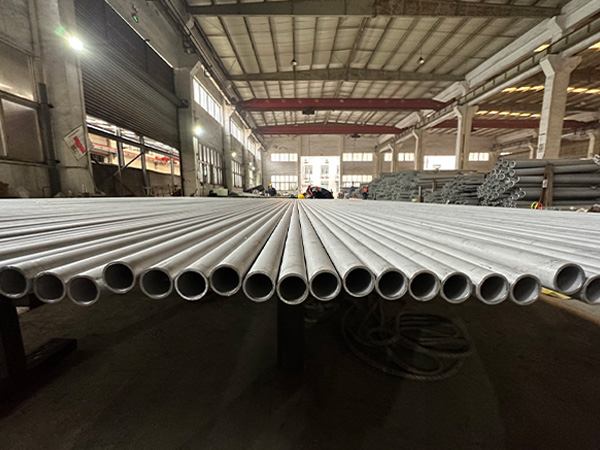
Selecting the right stainless steel pipe is essential for ensuring system safety, performance, and long-term service life. Stainless steel pipes are widely used in industries such as chemical processing, food and beverage, pharmaceuticals, oil and gas, power generation, and water treatment because of their excellent corrosion resistance, strength, and durability.
A properly selected stainless steel pipe can improve system efficiency, reduce maintenance costs, and prevent issues such as pressure failure, leakage, and premature corrosion.
The first step in selecting a stainless steel pipe is determining the correct pipe size according to the system design and flow requirements.
Pipe sizes are usually specified by:
NPS (Nominal Pipe Size) – Commonly used in North America and international projects.
DN (Nominal Diameter) – Metric designation widely used in Europe and Asia.
Outside Diameter (OD) – The actual external measurement of the pipe.
Wall Thickness – Determines pressure capability and mechanical strength.
The correct pipe size depends on factors such as:
Required flow rate
Fluid characteristics
Operating pressure
System layout
Installation space
For example, a pipeline transporting high-volume fluids may require a larger diameter pipe to reduce pressure loss, while compact equipment systems may require smaller stainless steel tubing.
Choosing the wrong pipe diameter can result in reduced efficiency, increased energy consumption, or insufficient flow capacity.
After determining the required pipe size, the next step is selecting the correct wall thickness, also known as the pipe Schedule (Sch).
The Schedule number indicates the relationship between pipe wall thickness and pressure capacity. A higher Schedule number means a thicker pipe wall and generally higher pressure resistance.
Common stainless steel pipe schedules include:
|
Stainless Steel Pipe Schedule |
Typical Application |
|
Sch 5S |
Low-pressure systems requiring corrosion resistance |
|
Sch 10S |
General industrial piping |
|
Sch 40S |
Medium-pressure applications |
|
Sch 80S |
Higher pressure and demanding service conditions |
|
Sch 160S |
Extreme pressure applications |
When selecting stainless steel pipes, it is important to specify the "S" series, such as:
Sch 10S
Sch 40S
Sch 80S
The "S" designation indicates stainless steel pipe dimensions according to ASME B36.19, which is different from carbon steel pipe dimensions covered by ASME B36.10.
For example, stainless steel Sch 40S may have a thinner wall thickness than carbon steel Sch 40 in larger sizes, even though the Schedule numbers appear similar.
Material standards ensure that stainless steel pipes meet required chemical composition, mechanical properties, and manufacturing requirements.
The most commonly referenced specification for stainless steel pipes is:
ASTM A312 Stainless Steel Pipe
ASTM A312 covers seamless and welded austenitic stainless steel pipes designed for high-temperature and corrosive applications.
Common grades include:
|
Stainless Steel Grade |
Characteristics |
Typical Applications |
|
TP304 / 304L |
General corrosion resistance and good weldability |
Food processing, chemical equipment, general piping |
|
TP316 / 316L |
Improved chloride corrosion resistance due to molybdenum addition |
Marine, chemical, pharmaceutical industries |
|
TP321 |
Titanium stabilized for high-temperature service |
Heat exchangers, thermal systems |
|
TP347 |
Niobium stabilized with good creep resistance |
High-temperature equipment |
Selecting the correct stainless steel grade depends on:
Corrosion environment
Operating temperature
Chemical exposure
Mechanical requirements
Welding requirements
For example, stainless steel 316L is often preferred over 304L in chloride-containing environments because of its enhanced corrosion resistance.
Even when the correct size and material grade are selected, dimensional accuracy is critical for reliable installation and operation.
Important tolerance factors include:
Outside Diameter Tolerance
The outside diameter must meet specified limits to ensure proper connection with fittings, valves, and other components.
Wall Thickness Tolerance
Wall thickness directly affects:
Pressure capacity
Structural strength
Service life
For seamless stainless steel pipes, ASTM A312 generally allows a negative wall thickness tolerance according to applicable requirements.
Surface Quality
A high-quality stainless steel pipe should have:
Smooth surface finish
No cracks or harmful defects
Proper heat treatment condition
Consistent dimensions
These factors are especially important for sanitary, pharmaceutical, and high-purity applications.
Different industries require different stainless steel pipe specifications.
Chemical Processing
Requires excellent corrosion resistance due to exposure to aggressive chemicals. Stainless steel grades such as 316L are commonly selected.
Food and Beverage
Requires hygienic surfaces and easy cleaning. Stainless steel pipes with polished finishes are widely used.
Oil and Gas
Requires strong mechanical performance and resistance to harsh environments. Proper material selection and pressure rating are essential.
Power Generation
High-temperature systems often require stainless steel grades with improved heat resistance and creep performance.
Avoid these common selection errors:
Choosing Size Only Based on Cost
A smaller or thinner pipe may reduce initial cost but can increase pressure loss and maintenance expenses.
Using Carbon Steel Pipe Schedules for Stainless Steel
Stainless steel pipes follow ASME B36.19 dimensions, so the correct "S" Schedule must be specified.
Ignoring Operating Conditions
Temperature, pressure, corrosion environment, and transported medium all affect material selection.
Selecting the Wrong Stainless Steel Grade
Using 304 stainless steel in highly corrosive environments may result in premature failure.
1. What factors should be considered when selecting stainless steel pipes?
The main factors include pipe size, wall thickness, pressure rating, stainless steel grade, operating temperature, corrosion environment, and applicable standards.
2. What Schedule should I choose for stainless steel pipe?
The correct Schedule depends on design pressure and operating conditions. Common options include Sch 10S, Sch 40S, and Sch 80S.
3. What standard is commonly used for stainless steel pipes?
ASTM A312 is one of the most widely used specifications for seamless and welded austenitic stainless steel pipes.
4. What is the difference between Sch 40 and Sch 40S stainless steel pipe?
Sch 40S follows stainless steel dimensions under ASME B36.19, while Sch 40 generally refers to carbon steel dimensions under ASME B36.10. The wall thickness may differ, especially for larger pipe sizes.
5. Which stainless steel grade is best for corrosive environments?
316 and 316L stainless steel are commonly selected for corrosive environments because the added molybdenum improves resistance to chloride corrosion.

United Steel Industry As the most important steel pipe manufacturer and exporter in China, in the past 20 years, we have completed more than 100 projects, with partners in more than 100 countries, and established relationships with oil and gas and EPC companies in many countries business relationship.
For more information about the product price, catalog and rolling mill inspection certificate,
please consult:Email:Sales@usisteels.com