Structural steel tubing is widely used in construction, infrastructure, machinery, and industrial engineering, where material selection directly affects structural performance and regulatory compliance. Among the most commonly specified standards, ASTM A500 is recognized worldwide for cold-formed welded and seamless carbon steel structural tubing.
For international projects, engineers and procurement teams frequently need to identify equivalent grades under European, Japanese, Chinese, or Canadian standards. Understanding these ASTM A500 equivalents helps simplify global sourcing, improve compatibility with regional specifications, and support efficient project execution.
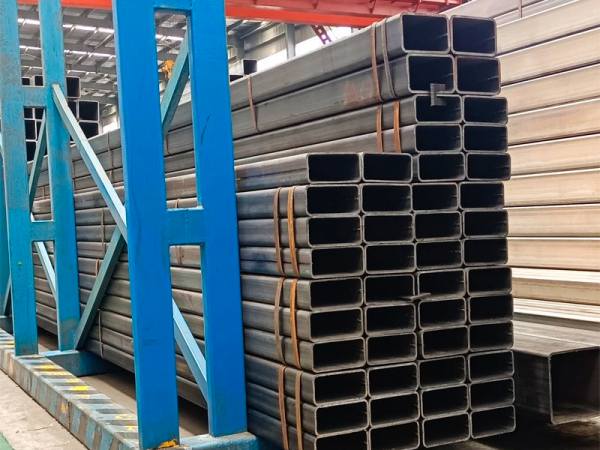
ASTM A500 is a specification covering cold-formed welded and seamless carbon steel structural tubing in round, square, rectangular, and special-shaped sections. It is commonly used for load-bearing structural applications because it offers an excellent balance of strength, weldability, dimensional accuracy, and fabrication performance.
The standard includes four material grades:
ASTM A500 Grade A
ASTM A500 Grade B
ASTM A500 Grade C
ASTM A500 Grade D
Among them, Grade B and Grade C are the most frequently specified for commercial and industrial construction.
Although international standards use different designation systems, many grades provide comparable structural performance to ASTM A500. However, equivalent materials may differ slightly in chemical composition, yield strength, testing requirements, or manufacturing processes.
|
ASTM Standard |
International Standard |
Equivalent Steel Grade |
|
ASTM A500 Grade A |
EN 10219 |
S235JRH |
|
ASTM A500 Grade B |
EN 10219 |
S275JRH |
|
ASTM A500 Grade C |
EN 10219 |
S355J2H |
|
ASTM A500 Grade B |
JIS G3466 |
STKR490 |
|
ASTM A500 Grade B |
GB/T 6728 |
Q355B |
|
ASTM A500 Grade C |
CSA G40.21 |
350W HSS |
Note: Equivalent grades should always be verified against project specifications, applicable design codes, and engineering requirements before substitution.
ASTM A500 structural tubing has become a preferred material for engineers and fabricators because it combines reliable mechanical performance with manufacturing efficiency.
Key benefits include:
High strength-to-weight ratio
Excellent weldability and fabrication performance
Accurate dimensions and consistent wall thickness
Good resistance to dynamic and static structural loads
Available in round, square, and rectangular hollow sections
Suitable for large-scale construction and industrial fabrication
These characteristics make ASTM A500 an excellent choice for both commercial buildings and heavy engineering projects.
ASTM A500 tubing and its equivalent materials are widely used across numerous industries.
Common applications include:
Structural steel buildings
Warehouses and logistics facilities
Industrial plants
Bridge construction
Transmission towers
Equipment support frames
Agricultural machinery
Transportation equipment
Mechanical fabrication
Infrastructure projects
Its combination of structural strength and fabrication flexibility allows engineers to meet demanding design requirements while optimizing material efficiency.
Selecting an equivalent material involves more than simply matching the steel grade designation. Engineers should evaluate several technical factors before approving a substitute.
Important considerations include:
Applicable regional standards and building codes
Minimum yield and tensile strength requirements
Chemical composition
Welding and fabrication requirements
Structural loading conditions
Environmental exposure and corrosion protection
Certification and inspection requirements
Comparing these factors helps ensure the selected material delivers equivalent structural performance throughout the project lifecycle.
Global construction and industrial projects often involve multiple international suppliers. Using recognized equivalent steel grades allows procurement teams to improve supply flexibility while maintaining engineering consistency.
High-quality structural tubing manufacturers also implement comprehensive quality control procedures, including:
Chemical composition analysis
Mechanical property testing
Dimensional inspection
Straightness verification
Non-destructive testing (NDT)
Surface quality inspection
These inspections help ensure products comply with international standards and project specifications.
1. What is the equivalent of ASTM A500 Grade B?
Common equivalents include EN 10219 S275JRH, JIS G3466 STKR490, and GB/T 6728 Q355B, depending on regional standards.
2. What is ASTM A500 used for?
ASTM A500 is primarily used for structural tubing in buildings, bridges, machinery, infrastructure, warehouses, and industrial fabrication.
3. Is ASTM A500 available in different shapes?
Yes. ASTM A500 tubing is manufactured in round, square, rectangular, and some special structural hollow sections.
4. Can ASTM A500 equivalent grades be substituted directly?
Not necessarily. Engineers should compare mechanical properties, chemical composition, testing requirements, and applicable design codes before selecting an equivalent material.

United Steel Industry As the most important steel pipe manufacturer and exporter in China, in the past 20 years, we have completed more than 100 projects, with partners in more than 100 countries, and established relationships with oil and gas and EPC companies in many countries business relationship.
For more information about the product price, catalog and rolling mill inspection certificate,
please consult:Email:Sales@usisteels.com