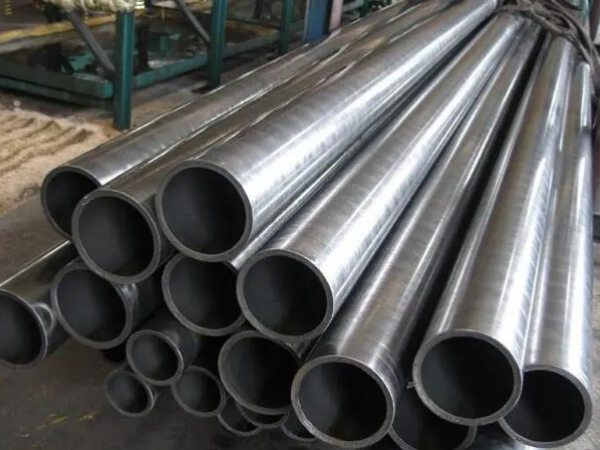
Cold drawn seamless steel pipes are widely used in applications where high dimensional accuracy, smooth surface finish, and tight tolerances are required. Compared with hot rolled pipes, cold drawn tubes offer better precision and consistency, making them ideal for hydraulic systems, automotive parts, and precision engineering.
This guide provides an overview of size ranges, application categories, selection principles, and standards of cold drawn seamless steel pipe.
Outer Diameter (OD): 5 mm – 200 mm
Wall Thickness (WT): 0.5 mm – 20 mm
Most Common Range:
OD: 10 – 120 mm
WT: 0.5 – 12 mm
Cold drawn pipes are preferred when tight tolerances and superior surface quality are critical.
To simplify engineering selection, cold drawn seamless pipes are typically grouped by outer diameter:
Applications:
Instrumentation tubing
Automotive components
Precision machinery
Hydraulic and pneumatic systems
Typical Size Range:
OD: 5 – 50 mm
WT: 0.5 – 5.0 mm
Key Features:
Extremely tight tolerances
Uniform wall thickness
Thin-wall tubes (<2 mm) are almost exclusively cold drawn
Typical Tolerance:
OD: ±0.05 mm
WT: ±5%
(Compliant with GB/T 3639 / DIN 2391)
This is the mainstream application range for cold drawn pipes.
Applications:
Hydraulic cylinders
Construction machinery
Industrial lifting systems
Typical Size Range:
OD: 50 – 120 mm
WT: 2.0 – 12.0 mm
Key Features:
Mature production process
Stable supply and cost
Widely used in engineering projects
Typical Tolerance:
OD: ±0.08 mm
WT: ±5%–8%
Applications:
Heavy-duty hydraulic cylinders
Mining equipment
Tunnel boring machines (TBM)
Large industrial systems
Typical Size Range:
OD: 120 – 200 mm
WT: 5.0 – 20.0 mm
Important Notes:
Production depends on manufacturer capability
Longer lead time and higher cost (≈30%–50% more)
For loose tolerance requirements, hot rolled + honing may be more economical
|
Outer Diameter (mm) |
Wall Thickness Range (mm) |
|
5 – 20 |
0.5 – 7.0 |
|
20 – 50 |
0.5 – 10 |
|
50 – 100 |
1.0 – 18 |
|
100 – 200 |
2.0 – 20 |
Note: Detailed combinations depend on standards and supplier capabilities.
≤ 50 mm → Precision small tubes
50–120 mm → Optimal engineering range
> 120 mm → Confirm production feasibility
Typical engineering guidance:
WT 2–3 mm → Low pressure / structural use
WT 3–5 mm → Standard hydraulic systems
WT ≥ 6 mm → High-pressure applications
Note: Final design should comply with ASME B31.3 or GB/T 20801.
IT10–IT11 → General applications
IT8–IT9 → Precision systems (hydraulic cylinders, machining parts)
Higher precision increases cost but reduces machining allowance and rejection rates.
Example (OD ≈ 50 mm, carbon steel):
WT 2.0 mm → ~12–16 MPa
WT 3.0 mm → ~20–25 MPa
WT 4.0 mm → ~28–35 MPa
WT 5.0 mm → ~35–42 MPa
WT ≥ 6.0 mm → ≥45 MPa
For reference only. Always verify with design codes.
GB/T 3639 → Precision cold drawn tubes
DIN 2391 → European precision standard
ASTM A179 → Heat exchanger tubes (mandatory cold drawn)
ASTM A106 → High-temperature pipes (cold drawn allowed with compliance)
EN 10216-1 → Pressure applications
BK (Cold Drawn) → High strength, high residual stress
BKS (Stress-relieved) → Improved stability
GBK (Annealed) → High ductility
NBK (Normalized) → Balanced mechanical properties
Q1: What is a cold drawn seamless steel pipe?
It is a seamless steel pipe processed by cold drawing, resulting in higher precision and better surface finish than hot rolled pipes.
Q2: What is the most common size range?
The most widely used range is OD 10–120 mm and WT 0.5–12 mm.
Q3: Why choose cold drawn over hot rolled pipes?
Cold drawn pipes provide tighter tolerances, smoother surfaces, and better dimensional control.
Q4: Are large diameter cold drawn pipes common?
No, pipes above 120 mm OD are less common and depend on manufacturing capability.
Q5: How do I select the right pipe size?
Follow this workflow:
Confirm OD range
Select WT based on pressure
Choose tolerance grade
Verify standards and processing requirements
Cold drawn seamless steel pipes are essential for applications requiring precision, consistency, and high performance. While size charts provide a reference, real-world selection must consider OD, wall thickness, tolerance, pressure, and manufacturing feasibility.
For critical projects, always verify specifications against relevant standards and supplier capabilities to ensure optimal results.

United Steel Industry As the most important steel pipe manufacturer and exporter in China, in the past 20 years, we have completed more than 100 projects, with partners in more than 100 countries, and established relationships with oil and gas and EPC companies in many countries business relationship.
For more information about the product price, catalog and rolling mill inspection certificate,
please consult:Email:Sales@usisteels.com