Common insulation methods for anti-corrosion steel pipes include coating insulation, wrapping insulation, prefabricated insulation structures, and filling insulation. The selection depends on pipe diameter, operating environment, and insulation material type.
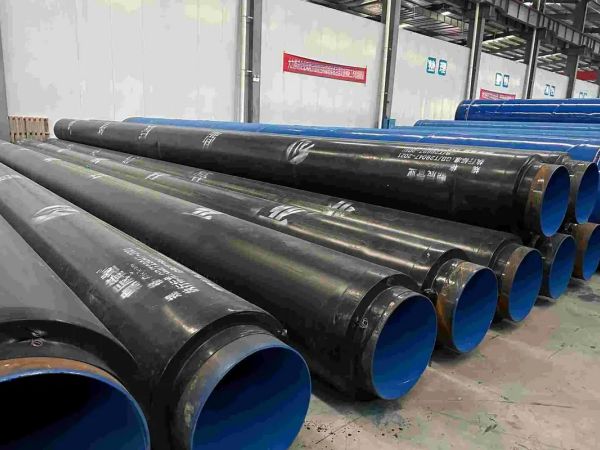
Anti-corrosion steel pipes are widely used in oil, gas, and chemical industries, where they are exposed to complex environments such as soil, moisture, and corrosive media. Although anti-corrosion coatings protect the pipe, additional insulation is often required to reduce heat loss, prevent condensation, and enhance overall durability.
In practice, both the internal and external surfaces of pipelines may suffer from chemical, electrochemical, or microbial corrosion. Once corrosion leads to perforation, it can result in leakage, environmental pollution, and serious safety risks. Therefore, combining anti-corrosion protection with proper insulation methods is essential for long-term pipeline performance.
The coating method involves applying a mixed insulation material directly onto the pipe surface to form a continuous protective layer.
Typical characteristics:
Uses loose materials mixed with binders and water
Applied manually or mechanically onto the pipe surface
Forms an integrated insulation layer after curing
Common materials include:
Expanded perlite, expanded calcite
Asbestos powder or fiber
Diatomaceous earth
Binders such as cement, water glass, or refractory clay
Suitable for irregular shapes or on-site construction.
This method uses flexible insulation materials formed into strips or ropes and wrapped around the pipe.
Key features:
Simple installation and low cost
Easy to apply for small to medium pipelines
Suitable for temporary or removable insulation
Common materials include:
Glass wool felt
Slag wool felt
Asbestos tape
Straw rope
Widely used in general industrial insulation scenarios.
Prefabricated insulation uses factory-made components installed directly onto the pipe.
Application logic:
DN < 100 mm: semi-cylindrical shells
DN ≥ 100 mm: fan-shaped or trapezoidal segments
Common materials include:
Foamed concrete
Calcium silicate
Glass wool or slag wool
Expanded perlite
Offers better uniformity, higher efficiency, and more stable insulation performance.
The filling method is used when insulation materials are in bulk form and require structural support.
Construction approach:
Install support rings on the pipe surface
Wrap outer structure with metal sheets or mesh
Fill insulation material into the enclosed space
Key features:
Suitable for removable insulation systems
Allows flexible thickness adjustment
Often combined with a metal protective shell
Common in large pipelines or high-temperature systems.
In engineering applications, insulation selection should consider multiple factors rather than relying on a single method.
Key selection factors:
Pipe diameter (DN size)
Operating temperature and pressure
Environmental conditions (humidity, soil, corrosion level)
Installation and maintenance requirements
In most cases:
Small pipes → wrapping method
Medium pipes → coating or prefabricated
Large pipes → prefabricated or filling method
Insulation is a critical complement to anti-corrosion protection in steel pipelines. Different insulation methods—coating, wrapping, prefabrication, and filling—offer distinct advantages depending on the application scenario. Proper selection not only improves thermal efficiency but also enhances corrosion resistance, safety, and service life of anti-corrosion steel pipes.
What are the main insulation methods for anti-corrosion steel pipes?
Coating, wrapping, prefabricated structures, and filling methods.
Which insulation method is most commonly used?
Wrapping and prefabricated insulation are the most widely used.
What materials are used for pipe insulation?
Glass wool, slag wool, perlite, calcium silicate, and foamed concrete.
How to choose the right insulation method?
Based on pipe size, temperature, and environmental conditions.
Why is insulation needed for anti-corrosion pipes?
To reduce heat loss, prevent condensation, and improve durability.

United Steel Industry As the most important steel pipe manufacturer and exporter in China, in the past 20 years, we have completed more than 100 projects, with partners in more than 100 countries, and established relationships with oil and gas and EPC companies in many countries business relationship.
For more information about the product price, catalog and rolling mill inspection certificate,
please consult:Email:Sales@usisteels.com