How Are Seamless Stainless Steel Pipes Produced by Extrusion?
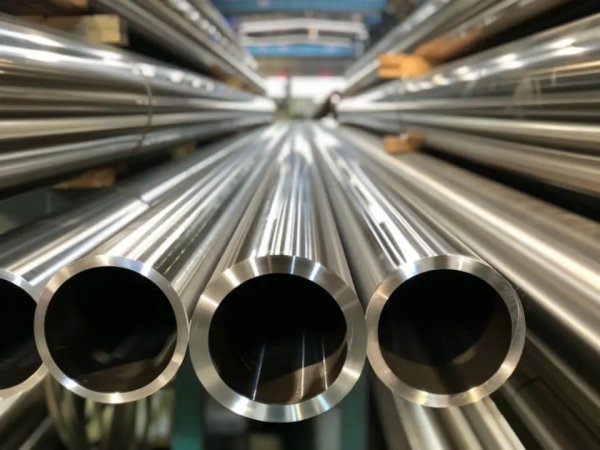
Seamless stainless steel pipes can be manufactured using the hot extrusion process, where a heated stainless steel billet is pierced and forced through an extrusion die under high pressure to form a hollow tube. This method is especially suitable for thick-wall pipes, special alloys, and complex cross-section tubes, offering flexible production and stable product quality.
What Is the Extrusion Process for Seamless Stainless Steel Pipes?
Extrusion is an important manufacturing method for seamless stainless steel tubes, particularly for small-batch, multi-specification, and special-shaped pipe production.
During the extrusion process, a heated billet is subjected to extremely high pressure inside an extrusion press, forcing the metal through a die to form a pipe with the required diameter and wall thickness.
Modern improvements in vertical hydraulic piercing equipment allow the wall thickness deviation of extruded pipes to be controlled within 5%–7%, significantly improving dimensional accuracy.
Typical Extrusion Production Process of Seamless Stainless Steel Pipes
The production of extruded seamless stainless steel pipes generally involves the following steps.
1. Billet Preparation
The raw materials are typically stainless steel billets, including:
Continuous casting billets
Forged billets
Using continuous casting billets allows manufacturers to maintain stable chemical composition and consistent mechanical properties.
2. Billet Heating
The billet is heated in a furnace to improve metal plasticity and ensure proper deformation during extrusion.
Proper heating temperature is critical for:
preventing cracking
improving forming efficiency
ensuring uniform microstructure
3. Hydraulic Piercing
A vertical hydraulic piercing mill is used to create a hollow center in the billet.
This process prepares the billet for extrusion and helps control wall thickness uniformity.
4. Extrusion Forming
The hollow billet is then pushed through a high-strength extrusion die under extremely high pressure.
For example:
A 50 MN (5000-ton) extrusion press can produce stainless steel pipes with diameters ranging from 25 mm to 245 mm.
Extrusion dies are relatively easy to design and replace, which makes this process ideal for multi-specification pipe production.
5. Finishing and Inspection
After extrusion, pipes undergo several finishing processes:
straightening
dimensional inspection
surface inspection
heat treatment (if required)
These steps ensure compliance with industrial quality standards.
Advantages of Extrusion for Stainless Steel Pipes
Extrusion offers several technical advantages compared with conventional rolling processes.
1. Flexible Production
Extrusion dies can be quickly replaced, making the process suitable for:
small-batch orders
customized pipe sizes
multi-specification production
2. Ability to Produce Special-Shaped Pipes
Extrusion can manufacture irregular cross-section pipes, including:
square tubes
rectangular tubes
complex alloy pipes
These shapes are difficult to produce using traditional rolling mills.
3. Direct Use of Continuous Casting Billets
Extrusion allows the direct use of continuous casting billets, reducing intermediate processing steps and ensuring stable product quality.
4. Suitable for High-Alloy Materials
Extrusion is particularly suitable for stainless steel and high-alloy steel pipes, which are more difficult to process using conventional rolling methods.
Main Limitation of the Extrusion Process
The primary drawback of extrusion-produced seamless stainless steel pipes is relatively low material yield.
Compared with some rolling processes, extrusion may result in higher material loss during billet preparation and forming.
To address this issue, many manufacturers have introduced improved processing techniques.
Process Optimization Methods of Seamless Stainless Steel Pipes
To improve production efficiency and yield, manufacturers commonly use optimized production routes.
- Small-Diameter Pipes
For small pipes:
solid billets are directly pierced using a vertical hydraulic piercing machine
then extruded into pipes.
- Medium-Diameter Pipes
For medium-sized pipes:
billets are pre-drilled with small holes
then extruded.
This reduces forming resistance and improves material utilization.
- Large-Diameter Pipes
For large pipes:
billets are pre-drilled with large holes
then directly extruded by the extrusion press.
This approach improves forming stability and reduces production defects.
Extrusion vs Rolling: Key Differences
|
Manufacturing Method |
Key Features |
Suitable Products |
|
Extrusion |
High flexibility, suitable for special alloys and complex shapes |
Thick-wall pipes, stainless steel tubes |
|
Hot Rolling |
High efficiency and high yield |
Large-volume standard pipes |
|
Cold Drawing / Cold Rolling |
High precision and smooth surface |
Precision tubes and thin-wall pipes |
Extrusion is therefore widely used for specialized stainless steel pipes and high-performance alloy tubes.
Surface Quality and Post-Processing of Seamless Stainless Steel Pipes
Extruded pipes, as well as pipes produced through cold drawing or cold rolling, may initially be semi-finished products.
Common surface issues include:
uneven wall thickness
surface dents
scratches
pits or spots
Additional processing such as:
grinding
polishing
dimensional correction
may be required to meet customer specifications.
Common Standards for Seamless Stainless Steel Pipes
Extruded stainless steel pipes are often manufactured according to international standards, including:
ASTM A312 – Seamless stainless steel pipes for high-temperature service
ASTM A213 – Seamless alloy and stainless steel boiler tubes
ASTM A269 – Seamless stainless steel tubes for general service
EN 10216-5 – Seamless stainless steel tubes for pressure purposes
Compliance with these standards ensures quality, safety, and international compatibility.
FAQ
1. What is the extrusion process for seamless stainless steel pipes?
Extrusion is a manufacturing method in which a heated stainless steel billet is forced through a die under high pressure, forming a seamless pipe with the required dimensions.
2. What sizes of stainless steel pipes can be produced by extrusion?
Large extrusion presses (such as 50 MN units) can produce pipes with diameters ranging from 25 mm to 245 mm, depending on equipment capacity.
3. Why is extrusion used for stainless steel pipe manufacturing?
Extrusion is ideal for thick-wall pipes, high-alloy materials, and complex cross-section tubes, offering flexible production and high product quality.
4. What is the main disadvantage of extrusion?
The main limitation is lower material yield compared with some rolling processes, which may increase production costs.
5. What industries use extruded stainless steel pipes?
Extruded stainless steel pipes are widely used in:
petrochemical industry
power plants
aerospace applications
high-pressure equipment manufacturing

United Steel Industry As the most important steel pipe manufacturer and exporter in China, in the past 20 years, we have completed more than 100 projects, with partners in more than 100 countries, and established relationships with oil and gas and EPC companies in many countries business relationship.
For more information about the product price, catalog and rolling mill inspection certificate,
please consult:Email:Sales@usisteels.com