During the manufacturing process of stainless steel welded pipes, heat treatment plays a critical role in improving product performance, weld quality, and surface finish. In modern stainless steel pipe production, manufacturers typically perform intermediate heat treatment and final heat treatment to enhance the microstructure and mechanical properties of the pipes.
One of the most significant advantages of stainless steel heat treatment technology is the bright annealing process, which enables the pipes to achieve a clean and oxidation-free surface. As a result, the traditional acid pickling process can often be eliminated.
This approach not only improves the surface quality and corrosion resistance of stainless steel welded pipes, but also significantly reduces environmental pollution caused by acid pickling chemicals, making it more aligned with modern green manufacturing standards.
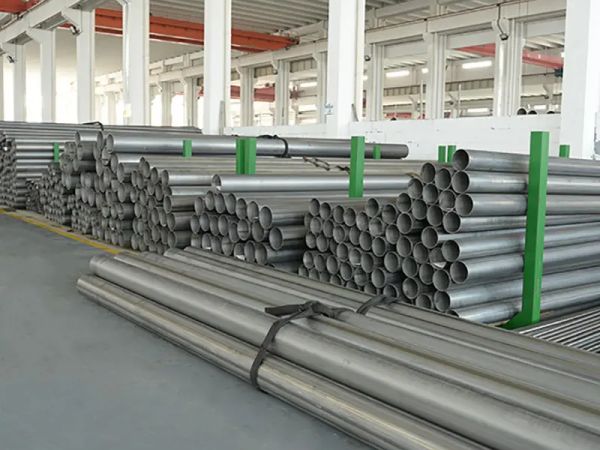
With the advancement of stainless steel pipe manufacturing technology, bright continuous annealing furnaces used in welded pipe production are generally divided into three main categories.
The roller hearth bright annealing furnace is designed for large-scale production of stainless steel welded pipes.
Key characteristics include:
Suitable for high-volume production lines
Hourly output capacity exceeding 1.0 ton
Use of high-purity protective gases such as hydrogen or ammonia
Optional convection cooling system for rapid pipe cooling
This type of furnace is commonly used in industrial facilities that require continuous production of stainless steel pipes with consistent quality.
The mesh belt bright heat treatment furnace is mainly used for processing small-diameter and thin-walled stainless steel welded pipes.
Main features include:
Hourly output of approximately 0.3–1.0 tons
Suitable for pipes with long lengths up to 40 meters
Capable of processing coiled capillary stainless steel tubes
Due to its flexibility, this furnace type is widely used in the manufacturing of precision stainless steel tubes for instrumentation and specialized applications.
In a muffle furnace system, stainless steel welded pipes are installed on a continuous carrier frame and heated inside a sealed muffle tube.
Key advantages include:
Suitable for small-diameter, thin-wall stainless steel welded pipes
Stable heating environment with reduced oxidation risk
Relatively low production cost
Hourly output of approximately 0.3 tons or more
This furnace design is commonly used in facilities producing high-precision stainless steel tubes with strict quality requirements.
To ensure high-quality stainless steel welded pipes, the welding process must meet several strict requirements:
Full weld penetration
No oxide inclusions
Minimal heat-affected zone (HAZ)
One of the most widely used welding methods is Tungsten Inert Gas (TIG) welding, also known as GTAW (Gas Tungsten Arc Welding).
This process provides:
Excellent weld penetration
Stable arc control
High weld seam quality
Strong adaptability for thin-wall stainless steel pipes
Due to their high corrosion resistance, clean surface, and reliable weld quality, stainless steel welded pipes are widely used in industries that require strict hygiene and safety standards, including:
Chemical processing industry
Nuclear power systems
Food and beverage processing equipment
Pharmaceutical manufacturing
These industries rely on stainless steel welded pipes for safe fluid transportation, high-temperature resistance, and long service life.
FAQ:
Q1: Why is bright annealing used for stainless steel welded pipes?
Bright annealing prevents oxidation during heat treatment, allowing pipes to maintain a smooth, bright surface without requiring acid pickling.
Q2: What protective gases are used in bright heat treatment furnaces?
Common protective gases include high-purity hydrogen and ammonia, which prevent oxidation and maintain surface cleanliness.
Q3: Which furnace type is best for small-diameter stainless steel welded pipes?
Mesh belt furnaces and muffle furnaces are typically used for small-diameter and thin-walled pipes.
Q4: Why is TIG welding commonly used for stainless steel pipes?
TIG welding provides high weld quality, strong penetration, and minimal heat-affected zones, making it ideal for stainless steel pipe manufacturing.
Q5: What industries commonly use stainless steel welded pipes?
Major applications include chemical plants, nuclear facilities, food processing systems, and pharmaceutical equipment.

United Steel Industry As the most important steel pipe manufacturer and exporter in China, in the past 20 years, we have completed more than 100 projects, with partners in more than 100 countries, and established relationships with oil and gas and EPC companies in many countries business relationship.
For more information about the product price, catalog and rolling mill inspection certificate,
please consult:Email:Sales@usisteels.com