API 5L SSAW steel pipe refers to spiral welded steel pipe manufactured in accordance with the pipeline standard issued by the American Petroleum Institute (API) under API Spec 5L.
SSAW stands for Spiral Submerged Arc Welded, a production method in which steel coils are continuously formed into a cylindrical shape and welded along a spiral seam using submerged arc welding (SAW) technology.
This manufacturing process allows the production of large-diameter pipelines with strong weld integrity, making API 5L SSAW pipes widely used in oil, gas, water transmission, and large infrastructure pipeline systems.
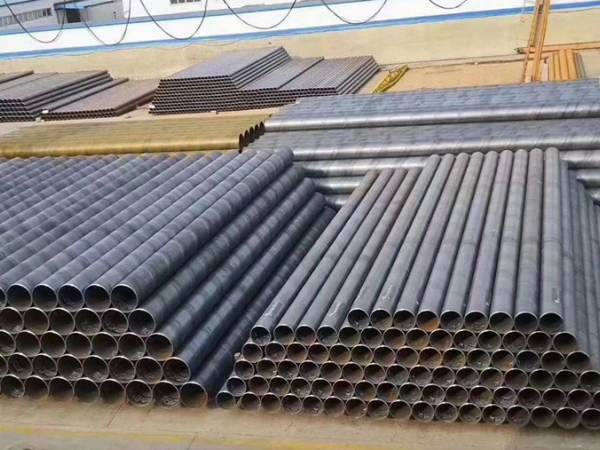
API 5L SSAW pipes are produced from hot-rolled steel coils that undergo spiral forming followed by double-sided submerged arc welding. These pipes are typically manufactured according to:
API Spec 5L (American Petroleum Institute pipeline standard)
GB/T 9711 (Chinese petroleum and natural gas pipeline standard)
1. Advanced Welding Process
The production process usually uses a two-stage welding system, where forming and welding are performed separately. This approach helps reduce residual stress and improves the toughness and reliability of the weld seam.
2. Wide Steel Grade Coverage
API 5L SSAW pipes are available in multiple grades, including:
GR.A
GR.B
X42 – X80
Among these, X70 and X80 are commonly used for long-distance oil and gas transmission pipelines, offering yield strengths in the range of 485–605 MPa.
3. Flexible Size Range
Typical dimensions include:
Outer diameter: 219 mm – 3048 mm
Wall thickness: 4 mm – 30 mm
Manufacturers can adjust the spiral forming angle (usually 15°–75°) to produce different pipe diameters using the same coil width.
API 5L defines several steel grades based on minimum yield strength requirements.
|
Grade |
Minimum Yield Strength |
|
B |
35,000 psi |
|
X42 |
42,000 psi |
|
X46 |
46,000 psi |
|
X52 |
52,000 psi |
|
X56 |
56,000 psi |
|
X60 |
60,000 psi |
|
X65 |
65,000 psi |
|
X70 |
70,000 psi |
API 5L Grade B
Commonly used for water pipelines, structural applications, and low-pressure transmission systems.
API 5L X52
Widely applied in oil and gas transportation pipelines due to its balanced strength and cost efficiency.
API 5L X65 / X70
High-strength grades designed for long-distance, high-pressure oil and gas pipeline projects.
Higher-grade pipes provide greater pressure resistance and improved mechanical performance, making them suitable for demanding pipeline environments.
Since pipeline systems often operate in corrosive or underground environments, API 5L SSAW pipes are usually protected with external or internal coatings.
Common Anti-Corrosion Coatings
FBE Coating (Fusion Bonded Epoxy)
Provides strong adhesion and excellent corrosion resistance. It is widely used for oil and gas pipeline protection.
3LPE Coating (Three-Layer Polyethylene)
A multilayer coating system combining epoxy primer, adhesive, and polyethylene outer layer. It offers:
excellent corrosion resistance
high mechanical strength
long-term durability
Cement Mortar Lining
Commonly applied to the internal surface of water transmission pipelines, protecting the steel pipe from corrosion while improving water flow conditions.
Proper anti-corrosion treatment can significantly extend the service life of pipeline systems.
Compared with other welded pipe types, SSAW pipes offer several key advantages.
1. Cost-Effective Production
Spiral welding allows manufacturers to use steel coils efficiently, reducing material waste and production costs.
2. Large-Diameter Capability
SSAW technology enables the production of very large-diameter pipes, sometimes exceeding 3 meters, making them ideal for large infrastructure pipelines.
3. Strong Weld Performance
The submerged arc welding process provides deep penetration and stable weld quality, ensuring reliable joint strength.
4. Flexible Manufacturing
By adjusting the spiral forming angle, manufacturers can produce different pipe diameters using the same raw material width.
API 5L SSAW steel pipes play an important role in modern pipeline infrastructure. Their large diameter capability, strong weld integrity, and cost-efficient production make them suitable for applications such as oil and gas transportation, water supply systems, and long-distance pipeline projects.
With proper coating and material selection, SSAW pipes provide reliable performance, long service life, and excellent structural strength in demanding environments.
1. What does SSAW mean in API 5L SSAW steel pipe?
SSAW stands for Spiral Submerged Arc Welded, a manufacturing process where steel coils are formed into pipes and welded along a spiral seam.
2. What are the common grades of API 5L SSAW steel pipes?
Common grades include API 5L Grade B, X42, X52, X60, X65, and X70.
3. What is the typical diameter range of SSAW steel pipes?
API 5L SSAW pipes generally range from 219 mm to 3048 mm in outer diameter.
4. Where are API 5L SSAW steel pipes commonly used?
They are widely used in oil and gas pipelines, water transmission systems, and large infrastructure projects.
5. Do SSAW steel pipes require anti-corrosion coating?
Yes, most SSAW pipes are protected with coatings such as FBE, 3LPE, or cement mortar lining to improve corrosion resistance and service life.

United Steel Industry As the most important steel pipe manufacturer and exporter in China, in the past 20 years, we have completed more than 100 projects, with partners in more than 100 countries, and established relationships with oil and gas and EPC companies in many countries business relationship.
For more information about the product price, catalog and rolling mill inspection certificate,
please consult:Email:Sales@usisteels.com