What Are Steel Coils?
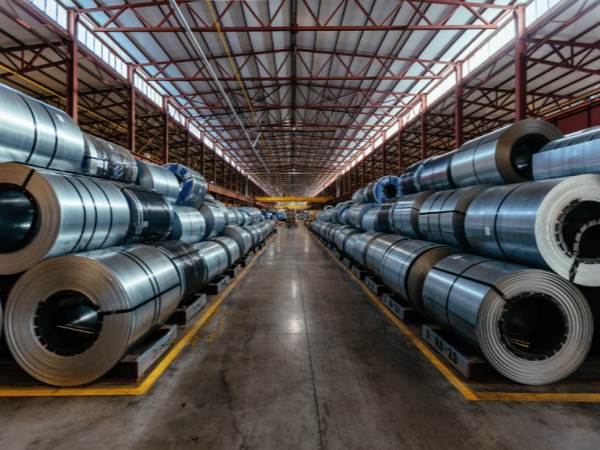
Steel coils are continuous, flat steel products produced by hot rolling or cold rolling steel slabs into long, thin sheets and winding them into coils.
They are one of the most widely used steel forms in global manufacturing, construction, energy, automotive, and appliance industries due to their versatility, consistency, and cost efficiency.
Steel coils can be further processed by cutting, slitting, coating, forming, or welding, making them a foundational material for both structural and precision applications.
What Are Steel Coils Made Of?
Steel coils are manufactured from different base materials depending on performance requirements and service environments:
Carbon steel – for structural strength and cost efficiency
Stainless steel – for corrosion resistance, hygiene, and high-temperature use
Aluminum or aluminum-coated steel – for lightweight and corrosion protection
Alloy steel – for enhanced mechanical or thermal performance
The correct material selection depends on factors such as exposure conditions, forming requirements, corrosion risk, and load-bearing needs.
Main Types of Steel Coils and Their Uses
- Hot-Rolled Steel Coil (HRC)
Hot-rolled steel coils are produced by rolling steel at high temperatures. Surface finish is rougher, but strength and toughness are excellent.
Typical uses:
Structural beams and frames
Oil & gas platforms
Heavy machinery and industrial components
Key advantage:
Cost-effective for high-volume, load-bearing applications where surface finish is not critical.
- Cold-Rolled Steel Coil (CRC)
Cold-rolled coils are further processed from hot-rolled steel at room temperature, improving surface finish and dimensional accuracy.
Typical uses:
Automotive body panels
Appliances and cabinets
Precision-formed components
Key advantage:
Superior surface quality, tighter tolerances, and better formability.
- Galvanized Steel Coil (GI / GL)
Galvanized steel coils are coated with zinc (GI) or zinc-aluminum alloy (GL) to prevent corrosion.
Typical uses:
Roofing and wall panels
HVAC ducts
Guardrails and outdoor structures
Key advantage:
Strong corrosion resistance in humid or outdoor environments.
- Pre-Painted Steel Coil (PPGI / PPGL)
PPGI and PPGL coils are galvanized coils with factory-applied paint systems.
Typical uses:
Decorative wall cladding
Roofing sheets
Billboards and facades
Key advantage:
Ready-to-use color finish with corrosion protection and reduced on-site processing.
- Stainless Steel Coil
Stainless steel coils offer exceptional resistance to corrosion, heat, and chemicals.
Typical uses:
Boilers and heat exchangers
Marine equipment
Food-grade and medical equipment
Key advantage:
Long service life in aggressive or hygienic environments.
What Are Steel Coils Used For (By Industry)
Construction
Used for roofing, wall panels, framing systems, and cladding.
Galvanized and pre-painted coils are preferred for durability and aesthetics.
Oil & Gas
Used in pipelines, platforms, and structural panels.
Coils must meet API, ASTM, or ISO standards with corrosion-resistant coatings.
HVAC Systems
Used in ducts, casings, and insulation panels.
Cold-rolled and galvanized coils are common due to formability and surface quality.
Automotive & Appliances
Used for car bodies, washing machines, refrigerators, and enclosures.
Cold-rolled and galvanized coils dominate due to precision and corrosion control.
Agriculture & Greenhouses
Galvanized or pre-painted coils resist humidity, UV exposure, and chemicals.
Fire Protection & Safety Systems
Used in pipe coverings, valve housings, and protective enclosures.
Galvanized or stainless coils are selected for heat and impact resistance.
Common Problems When Choosing Steel Coils
Choosing by Price Instead of Performance
Low-cost coils may corrode, crack during forming, or fail prematurely.
Always verify material grade, coating thickness, and test certificates.
Mismatch With Processing Equipment
Incorrect coil width, hardness, or weight can damage decoilers or roll-forming lines.
Confirm compatibility before ordering.
Confusion Between Coil, Sheet, and Plate
Coils: continuous processing, roll forming, slitting
Sheets: pre-cut, small batch fabrication
Plates: thick, heavy structural applications
Practical Tips for Choosing the Right Steel Coil
Start from the end-use environment (indoor, outdoor, corrosive, load-bearing)
Confirm standards and certifications (ASTM, JIS, EN, ISO)
Request Mill Test Certificates (MTC)
Consider logistics (coil weight, packaging, unloading method)
Work with manufacturers, not only traders, for customization and technical support
Benefits of Using Steel Coils
High versatility across industries
Cost-effective for mass production
Excellent recyclability and sustainability
Easy to cut, bend, weld, and form
Consistent quality and thickness control
FAQ
Q1: What is a steel coil used for?
Steel coils are used to manufacture panels, pipes, frames, appliances, vehicles, and heat exchange equipment.
Q2: What is the difference between hot-rolled and cold-rolled steel coils?
Hot-rolled coils focus on strength and cost, while cold-rolled coils offer better surface finish and precision.
Q3: Are galvanized steel coils rust-proof?
They are corrosion-resistant but not completely rust-proof in extreme marine or chemical environments.
Q4: When should I choose PPGI steel coils?
When color, appearance, and corrosion protection are required without additional painting.
Q5: How should steel coils be stored?
Store in dry, covered conditions, off the ground, to prevent moisture-related corrosion.
Final Takeaway
Choosing the right steel coil is not about selecting the cheapest option, but the most suitable one for your application.
When material type, coating, standards, and processing compatibility are aligned, steel coils deliver long-term performance, efficiency, and value.

United Steel Industry As the most important steel pipe manufacturer and exporter in China, in the past 20 years, we have completed more than 100 projects, with partners in more than 100 countries, and established relationships with oil and gas and EPC companies in many countries business relationship.
For more information about the product price, catalog and rolling mill inspection certificate,
please consult:Email:Sales@usisteels.com