Surface roughness is a critical quality indicator in precision steel pipe manufacturing.
The two most commonly used parameters—Ra (average roughness) and Rz (maximum roughness height)—are used to evaluate the microscopic surface profile of the pipe.
Ra→overall smoothness (average value)
Rz→extreme unevenness (maximum value)
Understanding their differences is essential for process control, quality inspection, and application matching.
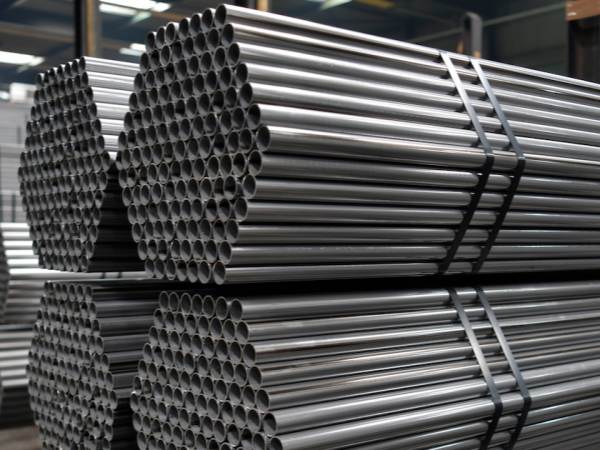
Surface roughness refers to the microscopic peaks and valleys on the pipe surface, typically measured in micrometers (μm).
Lower values = smoother surface
Higher values = rougher surface
It directly affects:
Sealing performance
Wear resistance
Friction behavior
Fatigue life
Definition
Ra (Arithmetic Average Roughness) is the average deviation of the surface profile from the centerline over a specified sampling length.
Key Characteristics:
Reflects overall surface quality
Based on average values of all peaks and valleys
Most widely used parameter in industry
Simplified Explanation
Ra measures the average height difference between microscopic peaks and valleys—similar to evaluating the“average level”of surface unevenness.
Typical Use Cases:
Precision steel pipe grinding and turning
Hydraulic pipes
Automotive tubing
General industrial applications
Advantages:
Stable and repeatable measurement
Easy to standardize and compare
Suitable for mass production quality control
Definition
Rz represents the maximum peak-to-valley height within a sampling length.
Measurement Method:
Identify the highest peaks and deepest valleys
Calculate the average of the top peaks and bottom valleys
Sum the two values
Key Characteristics:
Focuses on extreme surface defects
Sensitive to scratches, pits, and protrusions
Reflects maximum unevenness, not average
Typical Use Cases:
Aerospace precision pipes
High-sealing systems
Precision instruments
High-end mechanical components
Advantages:
Detects critical surface defects
Ensures reliability in demanding environments
|
Parameter |
Ra |
Rz |
|
Measurement focus |
Average roughness |
Maximum height difference |
|
Sensitivity |
Overall surface |
Extreme defects |
|
Stability |
High |
More variable |
|
Application |
General industry |
High-precision / critical use |
Key Insight:
Ra = overall smoothness control
Rz = defect risk control
Selection depends on application requirements:
Use Ra when:
General machining quality control is needed
Cost and efficiency are priorities
No strict defect limitations
Use Rz when:
Surface defects must be strictly controlled
High sealing or fatigue performance is required
Applications involve aerospace or precision systems
In many cases, Ra and Rz are specified together to ensure both average quality and defect control.
A typical specification may look like:
Ra≤0.4μm
Rz≤2.5μm
This ensures:
Smooth overall surface
No excessive peaks or deep scratches
Ra and Rz are both essential parameters for evaluating the surface roughness of precision steel pipes.
Ra provides a reliable measure of overall surface smoothness
Rz ensures that extreme defects are within acceptable limits
Using both parameters together enables comprehensive surface quality control, which is critical in high-performance applications.
1. What is the difference between Ra and Rz in surface roughness?
Ra measures the average surface deviation, while Rz measures the maximum peak-to-valley height, focusing on extreme irregularities.
2. Which roughness parameter is more important, Ra or Rz?
Neither is universally more important.
Ra is used for general quality control
Rz is critical for detecting defects in high-precision applications
3. What is a typical Ra value for precision steel pipes?
Common Ra values range from 0.1μm to 1.6μm, depending on the processing method and application requirements.
4. Why is Rz important in aerospace applications?
Because even a single surface defect (scratch or peak) can affect sealing, fatigue life, or system safety, Rz helps control these extreme irregularities.
5. Can Ra and Rz be used together?
Yes. In most high-quality specifications, Ra and Rz are combined to ensure both overall smoothness and strict defect control.

United Steel Industry As the most important steel pipe manufacturer and exporter in China, in the past 20 years, we have completed more than 100 projects, with partners in more than 100 countries, and established relationships with oil and gas and EPC companies in many countries business relationship.
For more information about the product price, catalog and rolling mill inspection certificate,
please consult:Email:Sales@usisteels.com