The surface finish of sanitary seamless pipes refers to the microscopic smoothness of the pipe inner surface, typically expressed as surface roughness Ra (μm).
In modern engineering standards, “surface finish” is formally replaced by surface roughness, which is a measurable parameter used to evaluate hygiene-grade piping quality.
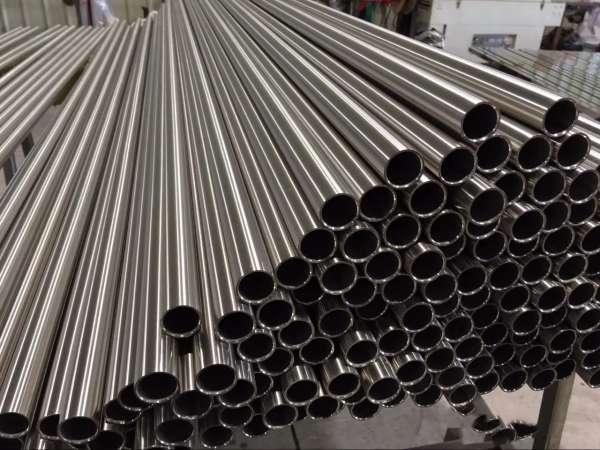
For sanitary applications, the key requirement is controlling inner surface roughness (Ra) to prevent contamination and microbial growth.
Typical Ra standards:
General sanitary applications: Ra ≤ 0.8 μm
High-purity / hygienic applications: Ra ≤ 0.4 μm
Ultra-clean systems (pharma-grade): Ra ≤ 0.2 μm (electropolished)
These requirements are commonly aligned with:
ASME BPE
ISO 2037
Surface roughness Ra represents the arithmetic average deviation of microscopic peaks and valleys on the pipe surface.
Key principle:
Lower Ra = smoother surface
Higher Ra = rougher surface
A smoother surface reduces:
Bacterial adhesion
Product contamination risk
Cleaning difficulty during CIP/SIP processes
|
Old Grade (▽) |
Surface Roughness Ra (μm) |
|
▽6 |
~1.6 μm |
|
▽7 |
~0.8 μm |
|
▽8 |
~0.4 μm |
Modern engineering uses Ra instead of ▽ notation.
Sanitary seamless pipes are widely used in:
Food processing systems
Pharmaceutical production lines
Biotech and fermentation systems
Cosmetics manufacturing
Key risks of poor surface finish:
Microbial growth in surface pits
Biofilm formation
Cross-contamination
Incomplete CIP/SIP cleaning
Therefore, internal surface quality directly affects product safety.
In addition to Ra value, sanitary seamless pipes must also ensure:
No oil contamination
No metal particles
No dust or residual processing debris
Fully cleaned and passivated surface condition
Cleaning must be maintained during:
Manufacturing
Transportation
Installation
Different finishing processes produce different Ra values:
AP Tube (Pickled & Passivated)
Ra ≤ 2.5 μm
Basic corrosion resistance
Not suitable for high-purity systems
BA Tube (Bright Annealed)
Ra ≤ 0.8 μm (can reach 0.4 μm)
Smooth surface
Common in sanitary pipelines
EP Tube (Electropolished)
Ra ≤ 0.4 μm (down to 0.15–0.2 μm)
Highest cleanliness level
Ideal for pharmaceutical and biotech systems
|
Tube Type |
Surface Treatment |
Typical Ra |
Application Level |
|
AP Tube |
Pickled & Passivated |
≤ 2.5 μm |
Industrial / non-critical |
|
BA Tube |
Bright Annealed |
≤ 0.8 μm |
Food & general sanitary |
|
EP Tube |
Electropolished |
≤ 0.4 μm (≤0.2 μm best) |
Pharma / ultra-clean |
Surface finish is a critical factor in sanitary pipeline design because it directly affects:
Hygiene safety
Product purity
Cleaning efficiency (CIP/SIP performance)
Long-term operational reliability
A rough inner surface increases contamination risk and cleaning difficulty, especially in sterile systems.
What is the standard Ra value for sanitary seamless pipes?
Typically Ra ≤ 0.8 μm, with high-purity systems requiring Ra ≤ 0.4 μm or lower.
Which standard defines sanitary pipe surface finish?
Common standards include ASME BPE and ISO 2037.
Why is low surface roughness important?
It prevents bacterial growth, improves cleaning efficiency, and ensures product safety.
Which pipe has the smoothest surface?
Electropolished (EP) pipes, with Ra as low as 0.2 μm.
What is the difference between BA and EP pipes?
BA is bright annealed (smooth surface), while EP is electropolished (ultra-smooth and ultra-clean).
The surface finish of sanitary seamless pipes is defined by surface roughness Ra, not visual smoothness. For sanitary systems, Ra ≤ 0.8 μm is standard, while pharmaceutical-grade systems require Ra ≤ 0.4 μm or lower. Selecting the correct surface treatment (AP, BA, or EP) ensures hygiene safety, cleaning efficiency, and compliance with international sanitary standards.

United Steel Industry As the most important steel pipe manufacturer and exporter in China, in the past 20 years, we have completed more than 100 projects, with partners in more than 100 countries, and established relationships with oil and gas and EPC companies in many countries business relationship.
For more information about the product price, catalog and rolling mill inspection certificate,
please consult:Email:Sales@usisteels.com