316L Stainless Steel Pipe resists chloride ion corrosion mainly because it contains molybdenum (Mo) and low carbon content, which improve the stability of the passive oxide film on the steel surface. This protective film helps reduce oxidation, pitting corrosion, and stress corrosion cracking in many industrial environments.
However, in high-chloride environments such as seawater, salt spray, or chemical processing systems, 316L stainless steel pipe can still experience localized corrosion, especially pitting corrosion and crevice corrosion.
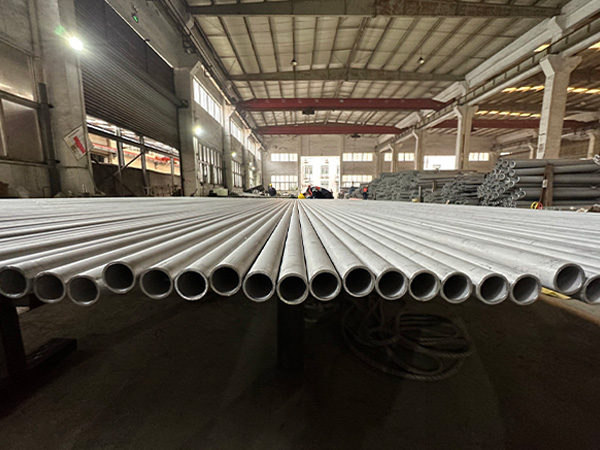
316L stainless steel pipe is widely used in:
Chemical plants
Oil refineries
Power plants
Marine engineering
Food processing systems
Pharmaceutical equipment
Compared with ordinary stainless steel, 316L stainless steel offers:
Better corrosion resistance
Higher ductility
Improved high-temperature resistance
Better weldability
Stronger resistance to stress corrosion cracking
The main reason for its corrosion resistance is the formation of a stable passive film on the metal surface. This ultra-thin oxide layer isolates the steel from oxygen, moisture, and corrosive media.
The corrosion resistance of 316L stainless steel pipe mainly comes from three key alloying elements:
|
Element |
Function |
|
Chromium (Cr) |
Forms the passive oxide film |
|
Nickel (Ni) |
Improves structural stability and toughness |
|
Molybdenum (Mo) |
Enhances resistance to chloride ion pitting corrosion |
Among them, molybdenum is especially important in chloride-containing environments because it improves the steel’s resistance to localized corrosion attacks.
How Chloride Ions Affect Stainless Steel
Chloride ions (Cl⁻) are highly aggressive to stainless steel surfaces. They can penetrate and damage the passive film, leading to localized corrosion.
Common chloride-containing environments include:
Seawater
Salt spray atmosphere
Cooling water systems
Chemical processing solutions
Industrial wastewater
When the passive layer breaks down, the following corrosion forms may occur:
Pitting corrosion
Crevice corrosion
Stress corrosion cracking
Among these, pitting corrosion is considered the most dangerous because small pits can develop into deep microcracks that weaken the material over time.
Although 316L stainless steel pipe has good chloride resistance, it is not completely immune to corrosion.
Research shows that several factors influence corrosion behavior in chloride environments:
Chloride ion concentration
Temperature
Dissolved oxygen content
pH value
Flow velocity
Exposure time
As chloride concentration increases:
The pitting potential of 316L stainless steel decreases
The number of corrosion pits increases
Pit depth becomes more severe
Higher temperatures also accelerate the corrosion reaction and make passive film breakdown easier.
The corrosion process of 316L stainless steel pipe is also affected by dissolved oxygen.
In chloride-containing solutions:
Higher chloride concentration promotes corrosion
Lower dissolved oxygen may partially inhibit oxygen depolarization corrosion
This means corrosion behavior is controlled by the combined effect of chloride ions and oxygen content rather than chloride concentration alone.
Why Pitting Corrosion Happens on 316L Stainless Steel Pipe
Pitting corrosion usually begins when the passive film becomes unstable or damaged.
In NaCl (salt) solutions:
Passive film formation on 316L stainless steel can be slow
The oxide layer may become incomplete
Small defects become initiation sites for pitting
Once pits form, they continue growing through an autocatalytic process, meaning corrosion inside the pit accelerates itself.
Key Factors Affecting Chloride Corrosion Resistance of 316L Stainless Steel Pipe
Pitting corrosion severity increases with chloride ion concentration.
Studies show that:
Low chloride concentrations produce fewer pits
Medium chloride concentrations can cause rapid pit growth
Long immersion times significantly increase pit density
Long-term exposure increases:
Pit quantity
Pit depth
Surface damage
Extended service time in chloride environments increases the risk of stress corrosion cracking.
The protective oxide layer is critical for corrosion resistance.
If the passive film becomes unstable due to:
Mechanical damage
High temperature
Chloride attack
Poor oxygen conditions
localized corrosion may begin rapidly.
1. Is 316L stainless steel resistant to seawater?
316L stainless steel has moderate seawater resistance, but long-term exposure to seawater can still cause pitting corrosion and crevice corrosion.
2. Why is molybdenum important in 316L stainless steel?
Molybdenum improves resistance to chloride ion attack and helps stabilize the passive oxide film.
3. Can 316L stainless steel rust?
Yes. Although highly corrosion-resistant, 316L stainless steel can still corrode under extreme chloride exposure or poor environmental conditions.
4. What type of corrosion is most common in 316L stainless steel pipe?
Pitting corrosion is the most common localized corrosion type in chloride-containing environments.

United Steel Industry As the most important steel pipe manufacturer and exporter in China, in the past 20 years, we have completed more than 100 projects, with partners in more than 100 countries, and established relationships with oil and gas and EPC companies in many countries business relationship.
For more information about the product price, catalog and rolling mill inspection certificate,
please consult:Email:Sales@usisteels.com