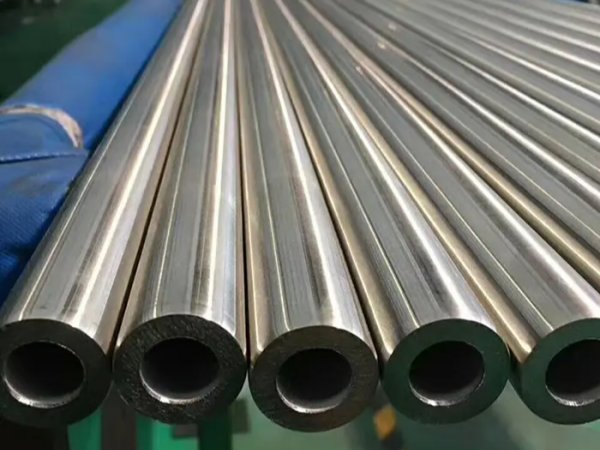
Although 316L thick-walled stainless steel pipes are known for their excellent corrosion resistance, high-temperature stability, and impact strength, corrosion can still occur under certain service conditions. These pipes are widely used in pharmaceuticals, food processing, chemical plants, industrial piping systems, exhaust systems, and mechanical manufacturing. However, long-term exposure to chlorides, moisture, acidic media, or electrochemical reactions may gradually damage the protective passive layer on the pipe surface.
Once corrosion appears, timely anti-corrosion measures are essential to prevent pipeline failure and extend service life.
316L stainless steel contains molybdenum, which improves resistance to chloride corrosion compared to 304 stainless steel. However, corrosion may still occur because of:
Chloride ion exposure
Galvanic corrosion
High-temperature oxidation
Surface contamination
Damaged passive film
Long-term humid or acidic environments
In many industrial systems, corrosion is often related to electrochemical reactions between different metals.
One of the most effective anti-corrosion methods for 316L thick-walled stainless steel pipes is cathodic protection.
The principle is simple:
Corrosion occurs at the anode side of an electrochemical cell.
If the stainless steel pipe is continuously maintained as the cathode (negative electrode), corrosion can be significantly reduced or prevented.
This method is widely used in pipelines, boilers, ships, underground piping, and industrial equipment.
This method uses a more active metal alloy—such as zinc, magnesium, or aluminum—as a sacrificial material.
The active metal is connected to the 316L stainless steel pipe, forming a galvanic cell:
The sacrificial metal becomes the anode and corrodes first.
The stainless steel pipe acts as the cathode and remains protected.
Because the sacrificial alloy corrodes instead of the pipe itself, the service life of the stainless steel system can be greatly extended.
Common Applications
Gas-fired boilers
Marine propellers
Underground pipelines
Industrial storage systems
When the sacrificial anode becomes heavily corroded, it can simply be replaced.
This method uses an external DC power supply to maintain the stainless steel pipe as the cathode.
Working principle:
The pipe is connected to the negative terminal of the power source.
Auxiliary anodes are connected to the positive terminal.
Electrical current suppresses oxidation on the pipe surface.
Compared with sacrificial anode systems, ICCP is more suitable for:
Long-distance pipelines
Wastewater systems
Rail infrastructure
Large industrial facilities
This method provides more stable long-term corrosion control in complex environments.
Besides cathodic protection, several preventive measures can improve corrosion resistance:
Surface Passivation
Chemical passivation restores the chromium oxide layer on stainless steel surfaces.
Regular Cleaning
Removing chlorides, dirt, and chemical deposits reduces pitting risk.
Proper Material Matching
Avoid direct contact between dissimilar metals that may create galvanic corrosion.
Coating Protection
Epoxy coatings or anti-corrosion linings can isolate the pipe from aggressive environments.
Environmental Control
Reducing humidity, chlorides, and acidic exposure can slow corrosion significantly.
|
Protection Method |
Principle |
Best Application |
Advantage |
|
Sacrificial Anode |
Active metal corrodes first |
Boilers, marine systems |
Simple & cost-effective |
|
Impressed Current |
External current protects pipe |
Long pipelines |
Strong long-term protection |
|
Passivation |
Restores oxide layer |
Food & pharma systems |
Improves surface resistance |
|
Protective Coating |
Isolates environment |
Chemical pipelines |
Reduces direct exposure |
1. Does 316L stainless steel rust easily?
No. 316L has strong corrosion resistance, but it is not completely immune under harsh environments.
2. What is the most common corrosion type in 316L pipes?
Pitting corrosion caused by chloride ions is one of the most common issues.
3. Is cathodic protection suitable for stainless steel pipes?
Yes. Cathodic protection is widely used to extend the lifespan of stainless steel piping systems.
4. Which is better: sacrificial anode or impressed current protection?
Small systems: sacrificial anode protection
Large industrial systems: impressed current protection
Although 316L thick-walled stainless steel pipes offer excellent corrosion resistance, harsh industrial environments can still damage the protective passive layer over time. Cathodic protection, passivation, coatings, and proper maintenance are effective strategies to reduce corrosion risk, improve pipeline reliability, and extend operational lifespan.

United Steel Industry As the most important steel pipe manufacturer and exporter in China, in the past 20 years, we have completed more than 100 projects, with partners in more than 100 countries, and established relationships with oil and gas and EPC companies in many countries business relationship.
For more information about the product price, catalog and rolling mill inspection certificate,
please consult:Email:Sales@usisteels.com