-
2023-09-11Product News
Nickel Alloy List
Nickel is a primordial element that can alloy with many other metals, including chromium, iron, molybdenum and copper. Adding nickel to other metals will change the properties of the resulting alloy and produce desired characteristics, for example, outstanding corrosion and oxidation resistance, exceptional high temperature strength and other unique properties. Today, we will talk about common nickel alloy list in details.
-
2023-09-01Product News
erw hot dip galvanized steel pipes
ERW (Electric Resistance Welded) hot dip galvanized steel pipes are a Hot Dip Galvanized Pipe
Hot-dip galvanizing (HDG), as referenced is the process of dipping fabricated steel into a kettle or vat of molten zinc.
Hot-dip galvanizing (HDG) is the process of coating iron, steel or ferrous materials with a layer of zinc. This done by passing the metal through molten zinc at a temperature of 860°F (460°C) to form zinc carbonate (ZNC03). Zinc carbonate is a strong material that protects steel and can prevent corrosion in many circumstances. Hot-dip galvanizing can be carried out cheaply and in large batches.
-
2023-09-01Product News
ANSI Schedule 80 Steel Pipes
ANSI Schedule 80 steel pipes are widely used in various industries due to their durability and ability to withstand high pressure applications. These pipes are designed with a thicker wall thickness compared to Schedule 40 pipes, providing extra strength and resistance.
The term "Schedule" refers to the pipe's wall thickness, with Schedule 80 having a thicker wall compared to Schedule 40. The wall thickness of Schedule 80 steel pipes allows them to handle higher pressures and offer better performance in applications where high pressure is involved.
When it comes to dimensions, ANSI Schedule 80 steel pipes follow the standards set by ASME B36.10. They come in different sizes or nominal sizes, ranging from small diameters up to larger ones, depending on the specific requirements of the application.
The pressure rating for these pipes is determined by factors such as material composition, temperature, and design specifications. It is important for engineers and designers to consider these factors when selecting the appropriate schedule and size for their projects.
ANSI Schedule 80 steel pipes are known for their extra strength and suitability for high-pressure applications. Their dimensions adhere to industry standards, making them a reliable choice for various industrial sectors requiring durable and robust piping systems.
-
2023-09-01Product News
ANSI Schedule 40 Steel Pipes
Based on the NPS and schedule of a pipe, the pipe outside diameter (OD) and wall thickness can be obtained from reference tables such as those below, which are based on ASME standards B36.10M and B36.19M. For example, NPS 14 Sch 40 has an OD of 14 inches and a wall thickness of 0.437 inches (11.1 mm).
NPS OD Schedule # Wall Thickness ID. 1.000” 1.315” SCH 40 0.133” 1.049” (approx.) 1.000” 1.315” SCH 80 0.179” 0.957” (approx.) pipes are specified by using the NPS and sch numbers. It is the schedule number that shows the approximate inside diameter.
-
2023-08-25Product News
Steel Rectangle Tube A513 / A500
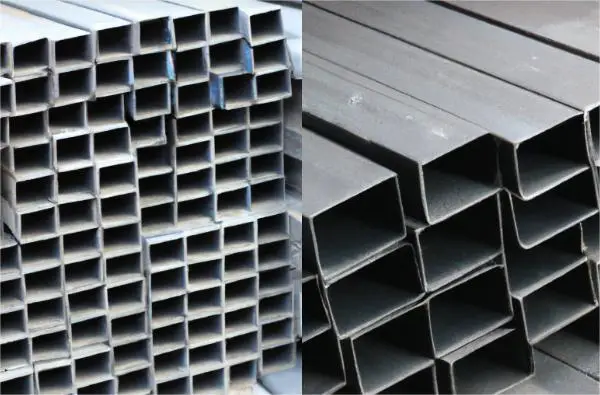
When it comes to structural applications that require strength and durability, steel tubing is often the material of choice. Among the various options available, the Steel Rectangle Tube A513 / A500 stands out as a popular choice due to its exceptional properties and versatility.
The Steel Rectangle Tube A513 / A500 is a type of hollow structural section that is widely used in construction, manufacturing, and other industries. 513 and A500 are both commonly used structural grades of steel tubing. They are classified as hollow structural sections (HSS), designed to withstand heavy loads and provide structural support.It is known for its high strength-to-weight ratio, making it ideal for applications where both structural integrity and weight efficiency are crucial factors.
-
2023-08-25Product News
Galvanized Pipe VS Black Pipe
When it comes to pipes, two common types that are often compared are galvanized pipe and black pipe. The main difference between these two lies in the surface treatment during the manufacturing process.
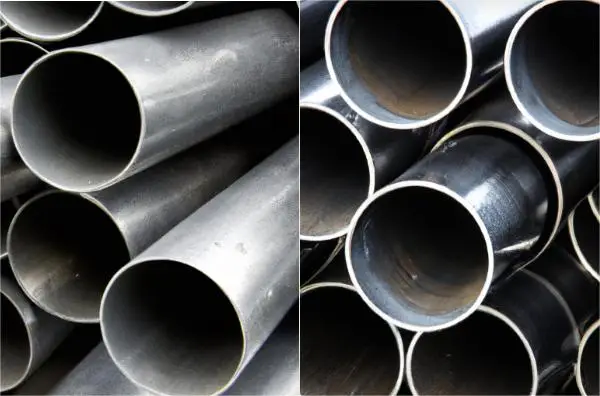
Black pipe, also known as black steel pipe, is made from untreated steel. It is commonly used for high-pressure steam and air applications, as well as for water transportation. Black pipes are known for their strength and durability, but they lack corrosion resistance.
On the other hand, galvanized pipe is coated with a layer of zinc during the manufacturing process. This zinc coating helps protect the underlying steel from corrosion and rusting. Galvanized pipes are commonly used in outdoor applications where they may be exposed to moisture or corrosive elements.
-
2023-08-25Product News
Galvanized and black coated steel pipes
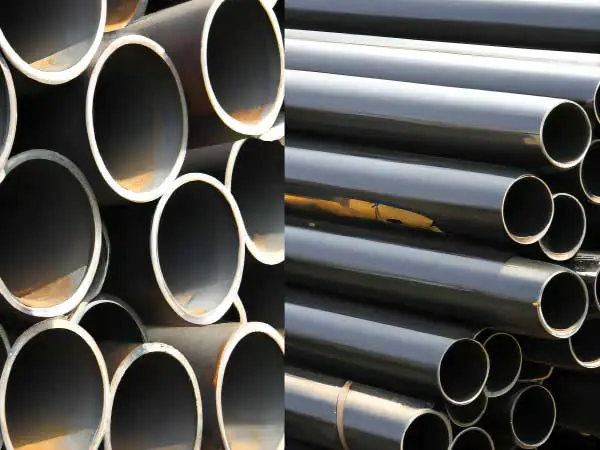
Galvanized and black coated steel pipes play a crucial role in various industries due to their unique properties and applications. These pipes are specifically designed to withstand harsh environmental conditions and provide reliable performance over an extended period.
One of the key advantages of galvanized steel pipes is their ability to serve as a sacrificial layer, protecting the underlying metal from corrosion. The galvanization process involves coating the steel pipe with a layer of zinc, which creates a barrier against moisture, chemicals, and other corrosive elements. This results in a higher ability of corrosion resistance compared to other types of pipes.
-
2023-08-03Product News
differences between erw and efw steel pipe
ERW steel pipe is the abbreviation of electric resistance welding.
ERW (Electric Resistance Welded) and EFW (Electric Fusion Welded) steel pipes are two commonly used types of steel pipes in various industries. While they may sound similar, there are distinct differences between the two.
ERW steel pipes are manufactured by rolling metal sheets and then welding them longitudinally using electric resistance. This process creates a strong bond between the sheets, resulting in a seamless and continuous pipe. ERW pipes are known for their high dimensional accuracy and uniformity, making them suitable for various applications such as oil and gas transportation, structural support, and plumbing.
EFW steel pipe is the abbreviation of electric fusion welding
EFW steel pipes are made by welding a plate or strip of steel across the longitudinal seam under high heat generated by an electric arc. This fusion welding process ensures a strong joint between the edges of the strip or plate, leading to a sturdy pipe with enhanced mechanical properties.
-
2023-08-03Product News
EFW stainless steel pipes
EFW stainless steel pipes, also known as Electric Fusion Welded stainless steel pipes, are a type of pipe commonly used in various industries for their exceptional strength and corrosion resistance.
EFW stainless steel pipes offer several advantages over other types of pipes. Firstly, they have a high degree of durability and can withstand extreme temperatures and pressures, making them suitable for use in demanding environments such as chemical plants and oil refineries. Additionally, these pipes have excellent resistance to corrosion, ensuring longevity and minimizing the risk of leaks or pipe failure.
EFW (Electric Fusion Welding) pipes and tubes are widely used in various industries for their durability and strength. These pipes and tubes are manufactured using the electric fusion welding process, which involves applying heat to the edges of the steel plates or coils until they reach a plastic state. The edges are then forced together under pressure to create a solid weld.
-
2023-07-14Product News
Alloy steel pipe introduction
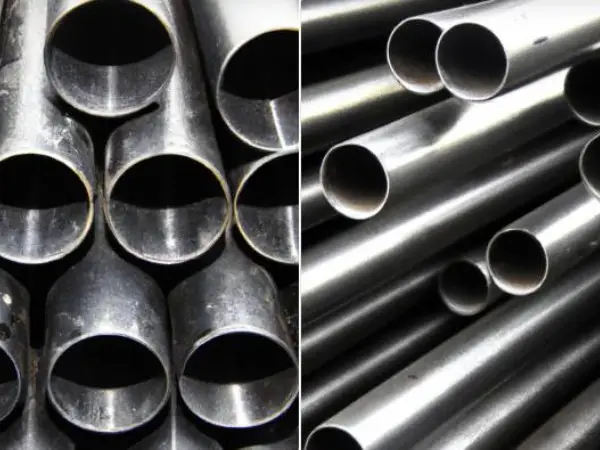
Alloy steel pipe is mainly used for high-pressure and high-temperature pipelines and equipment such as power plants, nuclear power plants, high-pressure boilers, high-temperature superheaters and reheaters. It is made of high-quality carbon steel, alloy structural steel and stainless heat-resistant steel. , by hot rolling (extrusion, expansion) or cold rolling (pulling).
The biggest advantage of alloy steel pipes is that they can be 100% recycled, which meets the requirements of environmental protection, energy saving, and resource conservation. Alloy pipes and seamless pipes are both related and different, and should not be confused with each other.
-
2023-07-14Product News
42CrMo alloy tube
42CrMo steel is an ultra-high-strength steel with high strength and toughness, good hardenability, no obvious temper brittleness, high fatigue limit and multiple impact resistance after quenching and tempering, and good low-temperature impact toughness. This steel is suitable for manufacturing large and medium-sized plastic molds that require certain strength and toughness.
-
2023-07-11Product News
Alloy Tube Standard
Alloy pipe characteristics:
The performance of the alloy pipe is much higher than that of the general seamless steel pipe, because this kind of steel pipe contains more Cr, and its high temperature resistance, low temperature resistance, and corrosion resistance are better than other seamless steel pipes. They are both related and different, and should not be confused with each other.