-
2023-06-15Product News
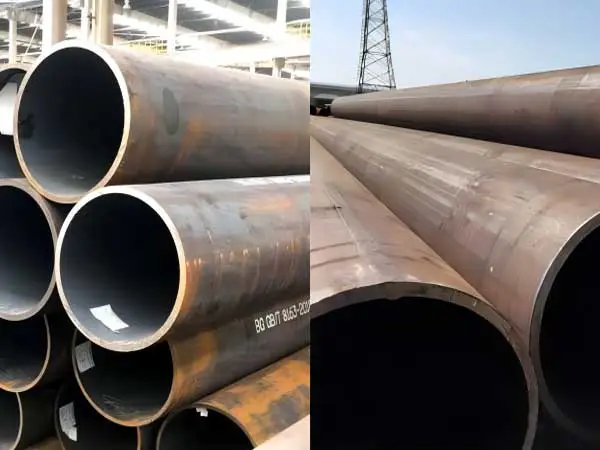
Comparison between ERW steel pipe and LSAW steel pipe
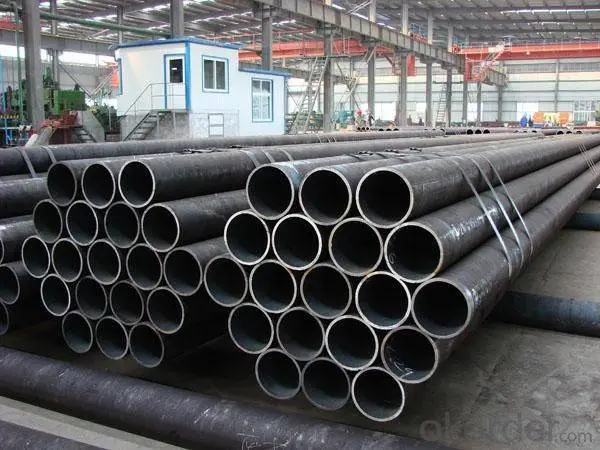
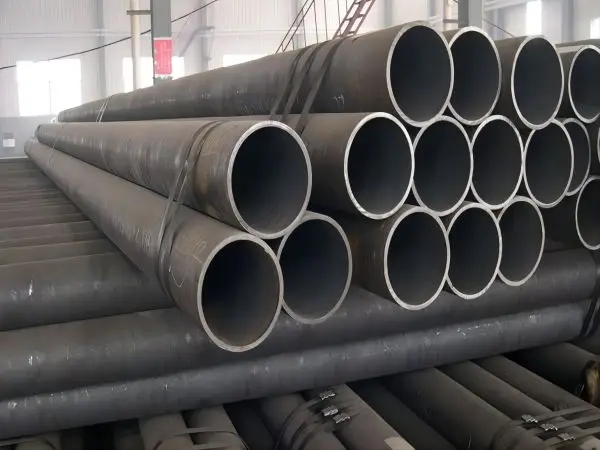
The difference between ERW straight seam electric resistance welded steel pipe and straight seam submerged arc welded (UOE) steel pipe:
Straight seam welded steel pipes are divided into high-frequency resistance welding and submerged arc welding according to the welding process. Straight seam submerged arc welding is referred to as UOE, and straight seam high-frequency resistance welding is referred to as ERW.
-
2023-06-16Product News
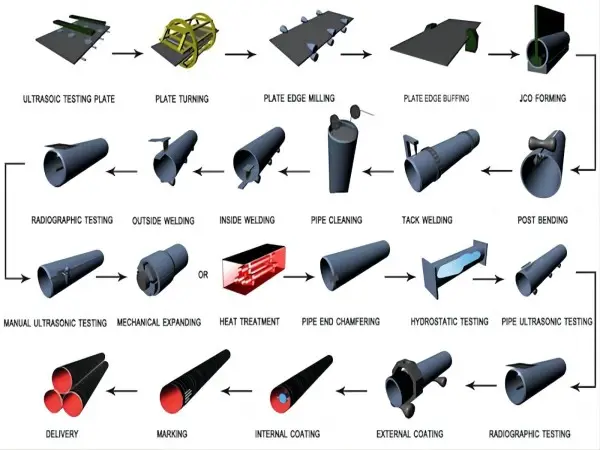
Double-sided submerged arc welding straight seam steel pipe production process
Double-sided submerged arc welding straight seam steel pipe production process
-
2023-06-16Product News
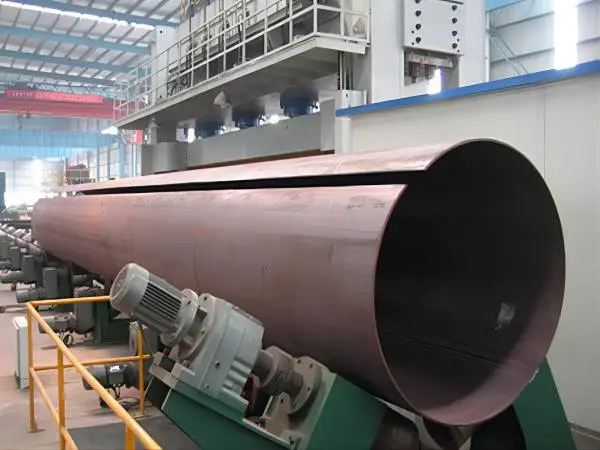
Introduction of Production Technology of Large Diameter Longitudinal Welded Pipe
Longitudinal welded pipes are made of steel plates or strips that are bent and then welded. According to the weld form, it is divided into straight seam welded pipe and spiral welded pipe. According to the purpose, it is divided into general welded pipe, galvanized welded pipe, oxygen blown welded pipe, wire casing, metric welded pipe, idler pipe, deep well pump pipe, automobile pipe, transformer pipe, electric welded thin-walled pipe, electric welded special-shaped pipe and spiral welded pipe.
-
2023-06-12Product News
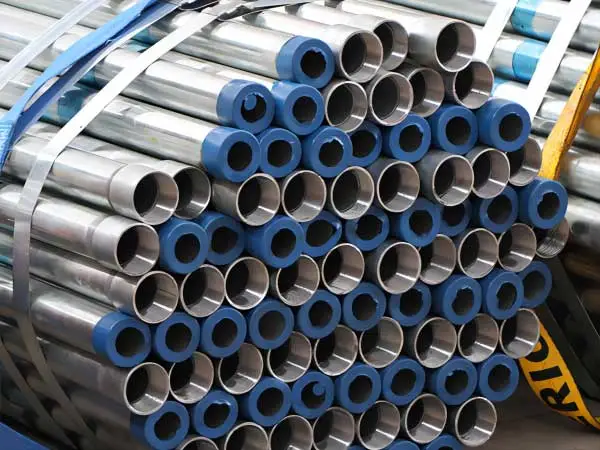
Complete knowledge of welded pipe
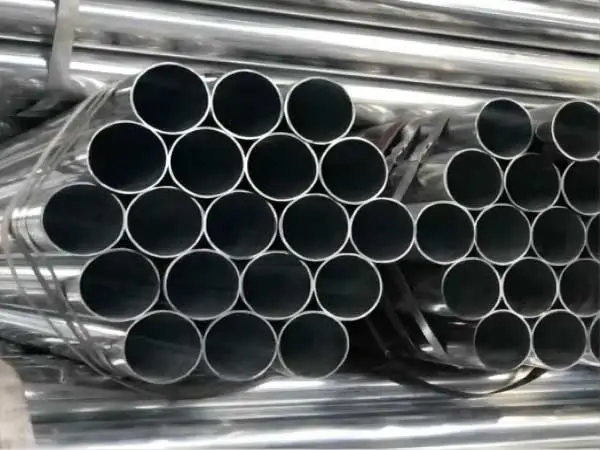
We can also call the welded pipe a welded steel pipe. Its manufacturing process is to weld some steel plate profiles or some materials containing steel components into the shape of a steel pipe after crimping and forming. The production method of welded steel pipe is very simple, the production efficiency is high, and there are many types and specifications of it, and the cost of production is very small, but the only disadvantage is that compared with seamless steel pipe, its strength is higher lower than seamless steel pipe
-
2023-06-12Product News
What is a welded steel pipe
La tubería de acero soldado, también conocida como tubería soldada, es una tubería de acero hecha de placa de acero o tira de acero después de engarzar y soldar. El proceso de producción de tubos de acero soldados es simple, la eficiencia de producción es alta y hay muchas variedades y especificaciones, pero la resistencia general es menor que la de los tubos de acero sin costura.
Los espacios en blanco utilizados para los tubos de acero soldados son placas de acero o tiras de acero, que se dividen en tubos soldados en horno, tubos soldados eléctricamente (soldadura por resistencia) y tubos soldados por arco automático debido a sus diferentes procesos de soldadura. Debido a sus diferentes formas de soldadura, se divide en dos tipos: tubería soldada con costura recta y tubería soldada en espiral. Debido a la forma de su extremo, se divide en tubería soldada redonda y tubería soldada de forma especial (cuadrada, plana, etc.).
-
2023-06-12Product News
Welded steel pipe standards and materials
Welded steel pipe, also known as welded pipe, is a steel pipe made of steel plate or strip steel after crimping and welding. Welded steel pipe has simple production process, high production efficiency, many varieties and specifications, and less equipment investment, but its general strength is lower than that of seamless steel pipe. Since the 1930s, with the rapid development of continuous rolling production of high-quality strip steel and the advancement of welding and inspection technology, the quality of welds has continued to improve, and the variety and specifications of welded steel pipes have increased day by day. Seam steel pipe. Welded steel pipes are divided into straight seam welded pipes and spiral welded pipes according to the form of the weld seam.
-
2023-06-09Product News
Types and specifications of threaded pipes for oil pipes
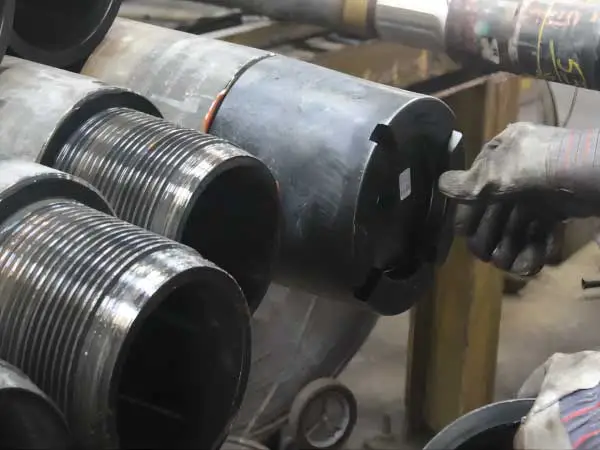
casing pipe is a deep machining product with high requirements and large consumption in petroleum drilling and production engineering. Use threads to connect a single oil casing into a long pipe string that can withstand hundreds of atmospheres of thousands of meters—a tubular high-pressure vessel. In 1924, API formulated the first oil well pipe standard. The thread of the oil casing pipe joint is a V-shaped thread with 10 threads per inch and 8 threads per inch, but it was later replaced by API8 round thread and partial ladder thread, and it is still in use today. The API SPEC 5B standard stipulates that the commonly used casing threads are round thread (abbreviated as CSG) and buttress thread (abbreviated as BCSG).
-
2023-06-09Product News
Oil casing pipe grade
There are 20 different steel grades and types of oil casings in H40, J55, K55, M65, N80, L80, C90, T95, C95, P110, Q125, in order to distinguish different steel grade strengths and thread types , using different color codes and symbols to represent the oil, steel grade and thread of the casing. The two or three digits behind the color code and the English letter indicate the minimum yield strength of the steel grade of the oil and casing, such as J55, which indicates that the minimum yield strength is 55,000 pounds/inch 2 (379Mpa) and the highest is 80,000 pounds/inch 2 ( 552Mpa), the minimum yield strength of P110 is 110,000 lbs/inch 2 (758Mpa) and the highest is 140,000 lbs/in 2 (965Mpa). H, J, K, N represent general strength oil casings, C, L, M, T represent limited yield strength oil casings, which have certain sulfur corrosion resistance.
-
2023-06-08Product News
API-SPEC-5D Drill pipe specifications
API-SPEC-5D Drill pipe specifications
-
2023-06-08Product News
Difference between API 5DP drill pipe and API 5D drill pipe
The difference between API 5DP and API 5D (pipe body and weld)
-
2023-06-07Product News
Oil drill collar
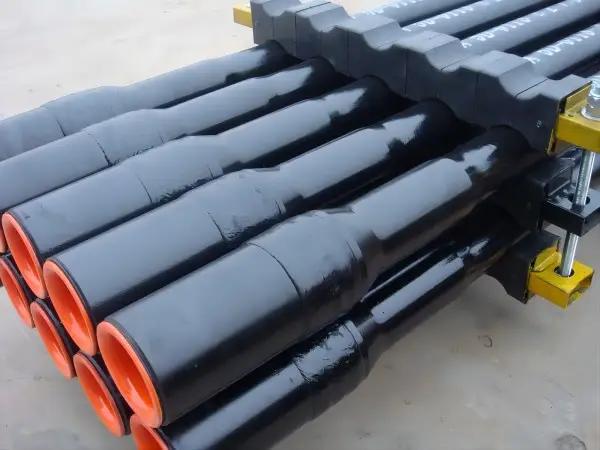
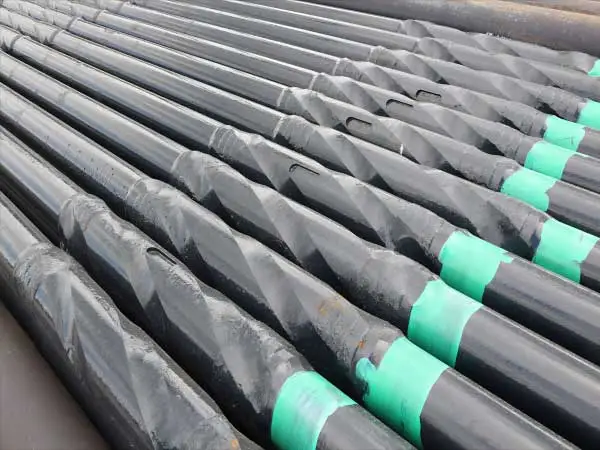
Drill collars are an important part of the drill string during oil drilling. Drill collars are located in the lower part of the drill string and are connected to the drill bit. In addition to transmitting torque, the weight on bit is also stroked to allow the bit to penetrate. During use, the drill collar is subject to environmental stress corrosion and alternating bending fatigue stress are the main factors causing failure and damage. In recent years, due to the continuous occurrence of fracture events of oil drill collars, it has attracted great attention from relevant parties.
-
2023-06-07Product News
Oil Casing pipe
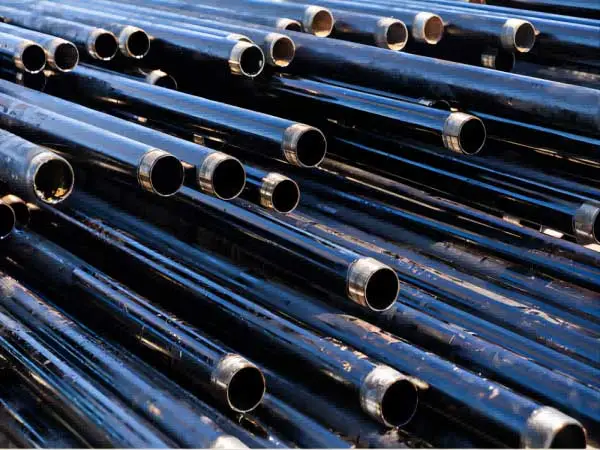
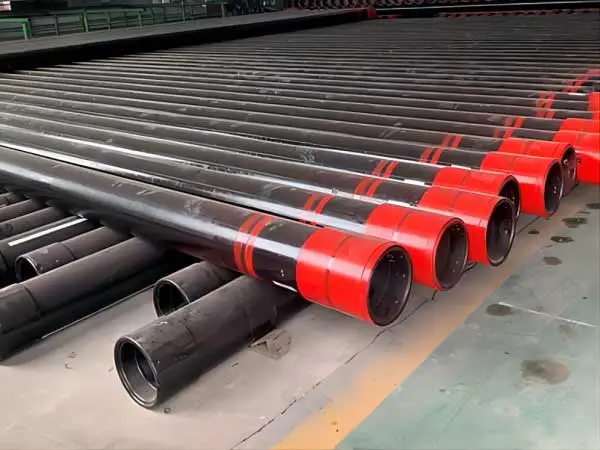
Petroleum casing is a steel pipe used to support the walls of oil and gas wells to ensure the normal operation of the entire oil well after the drilling process and completion. Each well uses several layers of casing according to different drilling depths and geological conditions. Cement cementing is used after the casing is lowered into the well. Unlike oil pipes and drill pipes, it cannot be reused and is a one-time consumable material. Therefore, the consumption of casing accounts for more than 70% of all oil well pipes. Casing can be divided into: conduit, surface casing, technical casing and oil layer casing according to the usage.