Steel pipe piles are critical structural elements used in foundations for offshore platforms, jetties, wind turbines, and other civil and industrial projects. Understanding their types, grades, and installation methods is essential for engineers, contractors, and project managers. This guide answers common questions about steel pipe piles, including friction piles, end-bearing piles, open-end and closed-end designs, and potential installation issues.
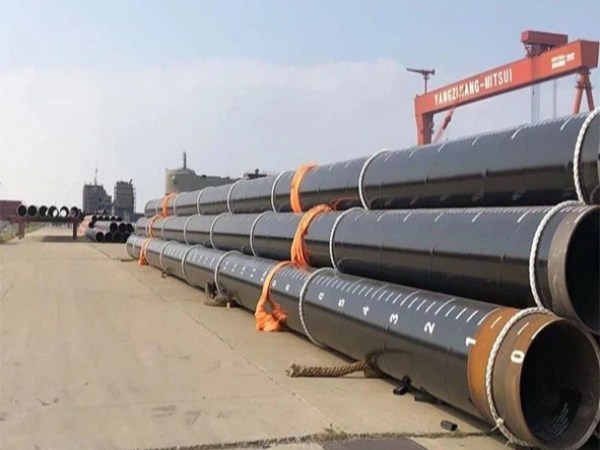
What Type and Grade of Steel Pipe Are Used for Piling Works?
The most commonly used specification for steel pipe piles is ASTM A252, which covers both seamless and welded steel pipes for piling purposes. These pipes are used either as load-bearing piles or as concrete pile encasements.
ASTM A252 Grades:
Grade 1: Minimum yield strength 30 ksi (207 MPa)
Grade 2: Minimum yield strength 35 ksi (241 MPa)
Grade 3: Minimum yield strength 45 ksi (310 MPa)
Grade 3 is typically preferred for heavy piling works due to its superior strength and structural performance.
What Is a Friction Pile?
Friction piles derive their load-bearing capacity primarily from adhesion between the pile surface and surrounding soil, rather than resting on rock or hard strata. Also called floating piles, they transfer loads along their entire length and cylindrical surface.
Key Points About Friction Piles:
Suitable for deep, soft soil where reaching hard layers is uneconomical
Load capacity increases proportionally with pile length
Open-ended friction piles provide higher efficiency by cutting through soil rather than displacing it
Friction piles are ideal for applications where horizontal resistance and bending strength are critical.
What Is an End-Bearing Pile?
End-bearing piles transfer loads directly to a stable rock or dense soil layer. The pile toe bears most of the structural load, bypassing weaker upper soil layers.
Characteristics:
Functions like a vertical column
Supports heavy and large structures
Offers high bearing capacity when upper soils are compressible
End-bearing piles are commonly used for foundations of industrial structures, high-rise buildings, and offshore platforms.
What Is “Plugging” in Pipe Piles and How to Avoid It?
During installation of open-ended pipe piles, soil can accumulate inside the pile, forming a soil plug that resists further intrusion. This is called plugging.
Management of Soil Plugs:
Can be removed using drilling or airlift methods to ease driving
If the pile is not filled with concrete, sand, or grout, removal may not be necessary
Plugged piles behave like closed-end piles, which can sometimes be beneficial
Proper understanding of plugging ensures efficient pile driving and prevents installation delays.
What Is the Purpose of Open-End Pipe Piles?
Open-end pipe piles are designed to penetrate soils with obstructions, including rocks, debris, and boulders. They are often equipped with special driving shoes to improve toe capacity and reduce stress during driving.
Applications:
Offshore structures, oil and gas platforms, jetties, and wind turbines
Situations requiring resistance to horizontal loads and bending moments
Freestanding columnar structures where constant radius of gyration is important
Open-ended pipe piles allow soil plugs to form naturally without compromising load capacity.
What Is the Purpose of Closed-End Pipe Piles?
Closed-end pipe piles have their toe sealed with a flat plate or conical tip to maximize bearing capacity at the pile base. They combine the properties of displacement and friction piles.
Key Points:
Suitable for soft, obstacle-free soil (flat plate closure)
Recommended for rocky or boulder-laden layers (conical tip, typically 60°)
Provides protection to the pile toe and ensures accurate load transfer
Closed-end piles are often used where maximum end-bearing capacity is required or where high-pressure conditions exist.
Conclusion
Steel pipe piles are versatile foundation elements, with friction piles, end-bearing piles, open-end, and closed-end designs serving different structural needs. Choosing the correct pipe grade, design type, and installation method is critical to ensure stability, efficiency, and durability in civil and offshore engineering projects.

United Steel Industry As the most important steel pipe manufacturer and exporter in China, in the past 20 years, we have completed more than 100 projects, with partners in more than 100 countries, and established relationships with oil and gas and EPC companies in many countries business relationship.
For more information about the product price, catalog and rolling mill inspection certificate,
please consult:Email:Sales@usisteels.com