What Is a Steel Pipe Pile?
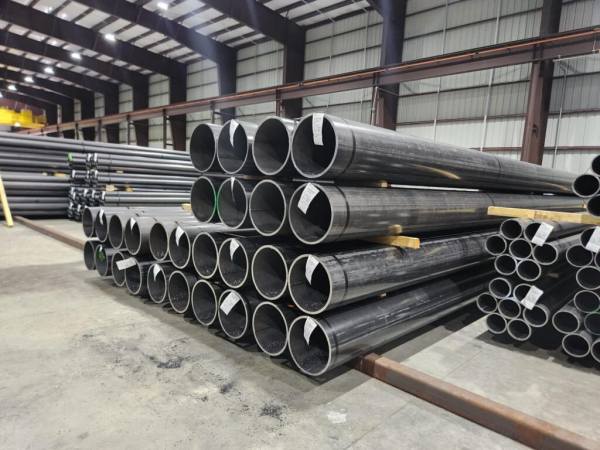
A steel pipe pile is a deep foundation element made from circular steel pipes or steel tubes, widely used in civil engineering, infrastructure, and marine construction. Due to their high structural strength, uniform material quality, and excellent seismic performance, steel pipe piles are commonly applied in projects requiring reliable load-bearing foundations.
With the increasing number of large-scale construction projects on soft soil, coastal zones, and offshore environments, the demand for foundations with strong earthquake resistance and long-term stability has grown significantly. Steel pipe piles are engineered to meet these requirements, making them a preferred solution for modern foundation systems.
Why Use Steel Pipe Piles in Construction?
Steel pipe piles provide several engineering advantages:
High load-bearing capacity, suitable for heavy structures
Excellent seismic resistance, critical for earthquake-prone regions
Uniform quality and predictable performance, due to controlled steel manufacturing
Adaptability to soft ground and marine environments, including coastal and offshore projects
These properties allow steel pipe piles to form highly reliable foundation systems for bridges, ports, buildings, and marine structures.
Steel Pipe Pile Specifications
Steel pipe piles are manufactured in a wide range of sizes to accommodate different design loads and soil conditions.
- Diameter Range
Steel pipe piles are available in diameters from 219 mm up to 3,620 mm or larger. Commonly used diameters in foundation engineering include:
406.4 mm
609.6 mm
630 mm
820 mm
914.4 mm
1,020 mm
These standardized sizes are widely adopted in infrastructure and marine construction projects.
- Wall Thickness Options
Steel pipe piles can be supplied with various wall thicknesses to suit different geological conditions and structural requirements. Typical wall thickness ranges from 6 mm to 47 mm, with commonly used thicknesses including:
10 mm
12 mm
13 mm
For example, a 630 mm diameter steel pipe pile often uses a 12 mm wall thickness, though thicker walls may be selected for higher load demands. Increased wall thickness significantly raises pile weight and load capacity.
- Length Options
Steel pipe pile lengths are determined by transportation, handling, and site installation conditions:
Standard single-section lengths: 8 m to 15 m (commonly 13 m or 15 m)
Typical piling pipe lengths: 8 m to 12 m
Special applications (e.g., helical steel pipe piles): up to 89 m
Small structural uses (e.g., warning posts): 400 mm, 600 mm, 750 mm, and other custom heights
Lengths can be customized or extended through welding to meet project-specific foundation depths.
Applications of Steel Pipe Piles
Steel pipe piles are widely used in:
Bridge foundations
Port and harbor structures
Offshore platforms
Coastal protection works
Buildings constructed on soft or reclaimed soil
Common Steel Pipe Pile Sizes
|
Common Sizes of Steel Pipe Piles |
|||
|
# |
OD x WT (mm) |
# |
OD x WT (mm) |
|
1. |
219×6~7 |
13. |
1016×8~19 |
|
2. |
273×5.6~8 |
14. |
1219×8~20.6 |
|
3. |
323.9×5.6~8 |
15. |
1422×8~20.6 |
|
4. |
355.6×5.6~9 |
16. |
1626×10~22.2 |
|
5. |
406.4×5.6~10 |
17. |
1829×12.7~23.8 |
|
6. |
457×5.6~10 |
18. |
1930×12.7~23.8 |
|
7. |
508×5.6~12 |
19. |
2032×14.3~25.4 |
|
8. |
610×6.4~13 |
20. |
2120×14.3~25.4 |
|
9. |
660×7.1~13 |
21. |
2235×14.3~25.4 |
|
10. |
711 × 7.1~14 |
22. |
2337×14.3~25.4 |
|
11. |
813 ×7.1~16 |
23. |
2438×14.3~25.4 |
|
12. |
914 ×7.1~16 |
|
|
Common Pipe Pile Standards
|
Standard |
Common Steel Grades |
Typical Applications |
Notes |
|
ASTM A252 |
Grade 1, 2, 3 |
Building foundations, bridge piles, harbor structures, marine piling |
Most widely used pipe pile standard |
|
API 5L |
Gr.B, X42–X80 |
Offshore piles, wind turbine monopile sections, port structures |
High performance; commonly used in marine piles |
|
EN 10219-1/2 |
S235JRH, S275J0H, S355J2H |
Building piles, temporary piles, structural supports |
Can be used as piles; more common is EN 10210 |
|
EN 10210-1/2 |
S235JRH, S275J0H, S355J2H |
Building foundations, bridge piles, marine structures |
Stronger and more reliable than EN 10219 for piles |
|
API 5CT |
J55, K55, L80, P110 |
Offshore wind foundations, temporary piles |
Not a pile standard but occasionally used |
|
ASTM A500 |
Grade B, C |
Light-duty piles, small foundations |
Used in light structural piling |
|
ASTM A53 |
Grade A, B |
Small-diameter piles, temporary works |
Lower performance compared with A252 |
|
ISO 3183 |
L245–L555 |
Offshore piles, marine/port structures |
International equivalent of API 5L |
Summary
Steel pipe piles are a high-strength, earthquake-resistant foundation solution designed for demanding civil and marine engineering applications. With flexible diameter, wall thickness, and length options, they can be engineered to meet a wide range of structural and geotechnical requirements.
FAQ
1. What is a steel pipe pile used for?
Steel pipe piles are used as deep foundation elements to support buildings, bridges, and marine structures, especially on soft soil or coastal sites.
2. What sizes are available for steel pipe piles?
Steel pipe piles are available in diameters from 219 mm to over 3,620 mm, with wall thicknesses typically ranging from 6 mm to 47 mm and customizable lengths.
3. Why are steel pipe piles suitable for seismic areas?
Steel pipe piles offer high strength, ductility, and energy absorption capacity, providing excellent earthquake resistance and reliable foundation performance.

United Steel Industry As the most important steel pipe manufacturer and exporter in China, in the past 20 years, we have completed more than 100 projects, with partners in more than 100 countries, and established relationships with oil and gas and EPC companies in many countries business relationship.
For more information about the product price, catalog and rolling mill inspection certificate,
please consult:Email:Sales@usisteels.com