In engineering design, comparing round tubes and square tubes with the same cross-sectional area is essentially an evaluation of structural efficiency under equal material usage.
Since material strength remains constant, the differences in mechanical performance arise purely from cross-sectional geometry. These differences are well-established, quantitatively verifiable, and carry strong engineering guidance value for structural selection.
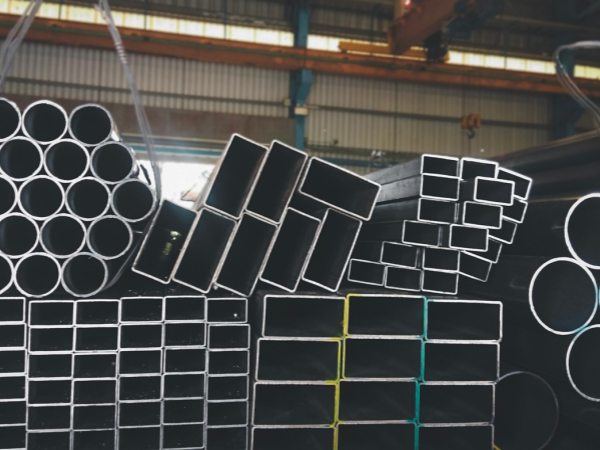
Advantages of Round Tubes
1. Outstanding Torsional Resistance (Absolute Advantage)
Core Principle
Under torsion, shear stress in a tube is transmitted as a continuous shear flow along the cross-section. A circular closed section provides the most uniform shear stress distribution, making it the most material-efficient shape for resisting torque.
Quantitative Comparison
For the same cross-sectional area, a round tube has a much larger polar moment of inertia than a square tube.
Its torsional section modulus is significantly higher, and torsional strength is often several times greater than that of a square tube with equal weight.
Engineering Implication
This advantage is decisive. Round tubes are mandatory for:
Drive shafts
Torque-transmitting rods
Rotating mechanical components
Any structure dominated by torsional loads
2. Superior Axial Compression Stability
Core Principle
Axial compressive strength depends not only on material strength, but also on buckling stability.
A circular tube has an identical radius of gyration in all directions, eliminating weak axes.
Quantitative Comparison
Under the same length and boundary conditions, circular tubes typically show a higher buckling stability coefficient.
They can withstand greater critical buckling loads, especially at high slenderness ratios.
Engineering Implication
For:
Slender columns
Bracing members
Towers and truss compression elements
Round tubes provide more reliable axial stability and effectively reduce bending–torsional buckling risks.
3. Excellent Local Stability and Pressure Resistance
Circular tube walls are less prone to local buckling under uniform internal or external pressure.
Stress distribution is smooth and continuous, without corner stress concentration.
Engineering Implication
This makes round tubes irreplaceable in:
Hydraulic cylinders
Pressure pipelines
Heat exchangers
Pressure vessel components
Advantages of Square Tubes
1. Extremely High Directional Bending Efficiency
Core Principle
For a given cross-sectional area, bending resistance increases when material is placed farther from the neutral axis.
Square and rectangular tubes naturally concentrate material at the outer edges, maximizing bending efficiency.
Quantitative Comparison
When the strong axis of a square or rectangular tube aligns with the bending moment direction,
Its bending section modulus can be 20%–50% higher (or more) than that of a round tube of equal weight.
Engineering Implication
This is why square tubes dominate:
Building beams
Purlins and frames
Equipment racks and platforms
They achieve maximum bending capacity with minimal material, delivering superior economic efficiency.
2. Tensile and Combined Load Performance
Under pure axial tension, tensile strength depends only on material—not cross-sectional shape.
However, under combined tension and bending, square tubes typically perform better due to their higher bending stiffness.
3. Space Utilization and Connection Convenience
Space Efficiency
Flat surfaces allow tight stacking and seamless alignment.
Ideal for shelving, curtain walls, modular frames, and architectural systems.
Connection Convenience
Right-angle edges simplify welding, bolting, and panel attachment.
Joint design is straightforward, installation is faster, and fabrication tolerances are easier to control.
These advantages are difficult for round tubes to match in structural framing applications.
Round Tube vs Square Tube: Engineering Comparison Table
|
Performance Aspect |
Round Tube |
Square Tube |
|
Torsional Resistance |
Excellent (Best) |
Poor to Moderate |
|
Axial Compression Stability |
Very High |
Direction-dependent |
|
Bending Efficiency |
Moderate |
Very High (Strong Axis) |
|
Pressure Resistance |
Excellent |
Limited |
|
Local Buckling Resistance |
Strong |
Weaker at Corners |
|
Connection Convenience |
Moderate |
Excellent |
|
Space Utilization |
Moderate |
High |
Engineering Selection Summary
Choose round tubes when the structure is dominated by:
Torsion
Axial compression
Internal or external pressure
Rotational or cylindrical load conditions
Choose square or rectangular tubes when the structure is dominated by:
Directional bending
Framing and support functions
Space efficiency and ease of connection
Cost-effective bending load capacity
FAQ
Q1: Which is stronger, a round tube or a square tube with the same cross-sectional area?
A: Strength depends on load type—round tubes are stronger in torsion and compression, while square tubes are stronger in directional bending.
Q2: Why are round tubes better for torque transmission?
A: Their circular closed section provides uniform shear stress distribution and the highest torsional efficiency.
Q3: Why are square tubes widely used in building frames?
A: Because they offer higher bending efficiency and easier connections with flat surfaces.
Q4: Are square tubes better than round tubes for pressure applications?
A: No. Round tubes perform significantly better under uniform internal or external pressure.
Q5: Does cross-sectional shape affect tensile strength?
A: Under pure tension, shape has little effect; under combined loads, shape becomes critical.

United Steel Industry As the most important steel pipe manufacturer and exporter in China, in the past 20 years, we have completed more than 100 projects, with partners in more than 100 countries, and established relationships with oil and gas and EPC companies in many countries business relationship.
For more information about the product price, catalog and rolling mill inspection certificate,
please consult:Email:Sales@usisteels.com