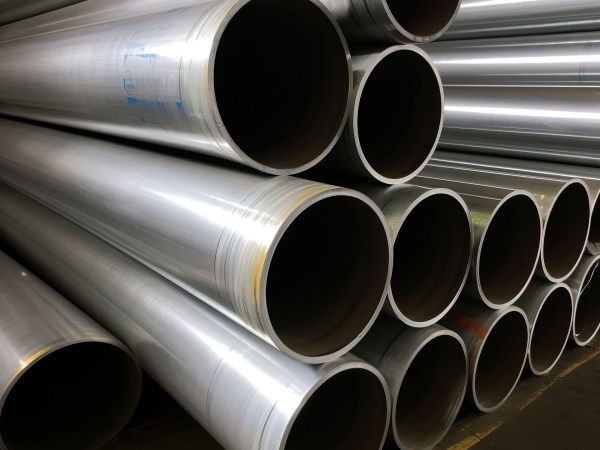
Advances in materials processing and welding technology have created new opportunities for the stainless steel pipe manufacturing industry, particularly in high-demand sectors such as automotive and precision engineering. Typical applications include exhaust pipes, fuel pipes, fuel injectors, and other tubular components requiring high formability and mechanical integrity.
In stainless steel pipe production, a flat steel strip is first formed into a cylindrical shape. After forming, the strip edges must be welded together to create a continuous tube. The quality of this longitudinal weld has a decisive influence on pipe formability, burst strength, and downstream processing performance. Therefore, selecting an appropriate welding technology is critical to meeting the stringent quality requirements of modern manufacturing.
Currently, the most widely used welding processes for stainless steel pipes include high-frequency (HF) welding, gas tungsten arc welding (GTAW / TIG), and laser welding.
High-Frequency Induction Welding for Stainless Steel Pipes
High-frequency welding includes high-frequency contact welding and high-frequency induction welding. In both processes, the power supply and the extrusion force system operate independently. A magnetic rod (impeder) is often inserted inside the tube to concentrate the welding current at the strip edges, improving heating efficiency.
Process Characteristics
Steel strip edges are trimmed and cleaned before forming
The strip is rolled into a tube and fed into the welding station
Induction coils heat the edges; coolant is used to control temperature
High extrusion pressure is applied to consolidate the weld and prevent porosity
Excessive extrusion force increases external and internal burrs, requiring dedicated deburring tools
Advantages and Limitations
Advantages
Very high production speed
Suitable for mass production
Limitations
Welds are difficult to inspect reliably using conventional non-destructive testing (NDT)
Thin or low-strength weld zones may contain cracks undetectable by standard methods
Reliability may be insufficient for demanding automotive applications
Gas Tungsten Arc Welding (GTAW / TIG) for Stainless Steel Tubes
GTAW (TIG welding) is a traditional and well-established welding process widely used in steel tube manufacturing. It generates an arc between non-consumable tungsten electrodes, while an inert shielding gas protects the weld pool from oxidation.
Key Features
Stable arc and excellent weld pool control
Spatter-free welding
Minimal porosity
High repeatability and consistent weld quality
Limitations
Electrically conductive process
Relatively slow welding speed
Higher heat input leads to a larger heat-affected zone (HAZ)
High-Frequency Arc Pulse GTAW Welding
Recent advances in GTAW power supplies have enabled high-frequency arc pulsing exceeding 10,000 Hz. This technology significantly increases arc pressure compared to conventional GTAW.
Benefits
Approximately five times higher downward arc pressure
Improved burst strength
Increased welding speed
Reduced scrap rate
Constraints
Weld profile must be carefully controlled
Overall welding speed remains slower than laser welding
Laser Welding of Stainless Steel Pipes
Laser welding differs fundamentally from arc-based processes due to its high energy density. The focused laser beam melts the material and forms a keyhole, resulting in deep penetration and a very narrow weld profile.
Technical Advantages
Narrow and deep welds
Smaller heat-affected zone
Reduced grain growth
Superior metallographic quality
Higher burst strength and improved formability
In contrast, GTAW and HF welding operate below the power density required to form a keyhole, producing wider and shallower weld profiles.
Performance Comparison
Faster than GTAW
Similar or lower scrap rates
Better formability than HF welding
No oxidation during welding, reducing post-processing defects
Influence of Laser Spot Size on Weld Quality
In stainless steel pipe welding, weld depth is governed by pipe thickness. To improve formability and production speed, manufacturers aim to reduce weld width, which requires smaller laser spot sizes.
However, laser selection must consider:
Beam quality
Rolling mill accuracy
Dimensional tolerances of the formed strip
Excessively small spot sizes may exceed the alignment capability of the forming system, leading to weld instability.
Weld Joint Geometry and Dimensional Control
Key weld joint parameters include:
Strip edge gap
Weld misalignment (slight or severe)
Weld centerline deviation
Excessive gaps or extrusion pressure can cause material buildup at the inner or outer diameter. Misalignment negatively affects weld appearance and mechanical performance.
A general industry guideline is that weld defects should not exceed 5% of material thickness, as higher values compromise weld strength.
Importance of Weld Seam Tracking in Laser Welding
As automotive applications increasingly demand higher formability, manufacturers must minimize:
Weld profile size
Heat-affected zone (HAZ)
Weld centerline deviation
With shrinking laser spot sizes, accurate weld seam tracking becomes essential.
Tracking Technologies
Mechanical Tracking
Uses physical probes
Susceptible to dust, wear, and vibration
Typical accuracy: ~0.25 mm (insufficient for high-quality laser welding)
Laser Seam Tracking
Projects a laser line or spot onto the weld area
CMOS cameras capture images
Algorithms detect seam position, gaps, and misalignment
Enables closed-loop control of the laser focus head
Achieves the accuracy required for modern laser welding systems
Both tracking accuracy and system response time are critical.
Conclusion
Modern weld seam tracking technology, combined with high-quality laser sources, enables stainless steel pipe manufacturers to:
Reduce weld porosity
Minimize weld width
Improve formability
Maintain or increase welding speed
Advanced laser systems, such as diffusion-cooled slab lasers, further enhance beam quality but demand tighter dimensional control and more precise seam tracking. As a result, laser welding has become a key enabling technology for producing high-performance stainless steel pipes for automotive and precision applications.
FAQ
FAQ 1: Which welding process is best for stainless steel pipes?
Laser welding offers the best formability, weld quality, and mechanical performance for high-end stainless steel pipe applications.
FAQ 2: Why is weld quality critical in stainless steel pipes?
The longitudinal weld directly determines pipe strength, formability, fatigue resistance, and downstream processing performance.
FAQ 3: Is high-frequency welding suitable for automotive pipes?
HF welding is suitable for high-volume production but may lack reliability for demanding automotive formability requirements.
FAQ 4: What advantage does laser welding have over GTAW?
Laser welding produces a narrower weld, smaller heat-affected zone, and better metallographic quality than GTAW.
FAQ 5: Why is weld seam tracking important in laser welding?
Accurate seam tracking ensures stable welding, minimal defects, and full utilization of high-quality laser beams.

United Steel Industry As the most important steel pipe manufacturer and exporter in China, in the past 20 years, we have completed more than 100 projects, with partners in more than 100 countries, and established relationships with oil and gas and EPC companies in many countries business relationship.
For more information about the product price, catalog and rolling mill inspection certificate,
please consult:Email:Sales@usisteels.com