Mechanical tubing refers to steel tubing used primarily for mechanical structures, load-bearing systems, power transmission components, and precision engineering applications. Unlike standard pressure piping, mechanical tubes focus more on dimensional accuracy, surface finish, machinability, and mechanical performance rather than internal pressure resistance alone.
This guide explains mechanical tube standards, dimensions, manufacturing methods, tolerances, materials, and real-world industrial applications.
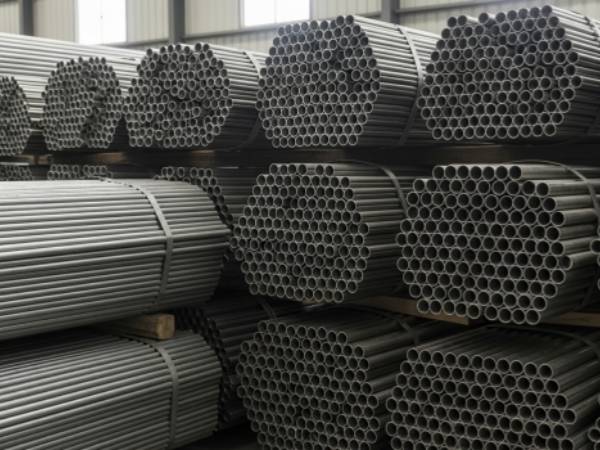
Mechanical tubing is steel tubing manufactured for structural and mechanical applications rather than fluid transportation.
Compared with conventional steel pipe, mechanical tubing typically provides:
Better dimensional precision
Improved concentricity
More consistent wall thickness
Smoother surface quality
Better machining performance
These characteristics make mechanical tubing suitable for precision industrial systems.
Mechanical steel tubing is widely used in:
|
Industry |
Typical Applications |
|
Automotive |
Drive shafts, suspension parts, roll cages |
|
Hydraulic Systems |
Cylinder barrels, piston rods |
|
Industrial Machinery |
Machine frames, support tubes |
|
Construction Equipment |
Mechanical structures, lifting systems |
|
Agriculture |
Equipment frames and transmission components |
|
Precision Engineering |
Bearing sleeves and bushings |
Different applications require different mechanical tubing standards.
ASTM A513 covers electric resistance welded (ERW) carbon and alloy steel mechanical tubing.
Main Features
Good dimensional consistency
Smooth surface finish
Economical production cost
Suitable for high-volume manufacturing
Common Applications
Automotive parts
Structural components
Agricultural equipment
General machinery
ASTM A519 covers seamless carbon and alloy steel mechanical tubing.
Main Advantages
No weld seam
Higher pressure resistance
Better fatigue strength
Improved structural integrity
Typical Applications
Hydraulic cylinders
Heavy equipment
Precision machinery
High-load mechanical systems
SAE tubing standards are commonly used for transportation and hydraulic systems.
These tubes are widely applied in:
Hydraulic lines
Fuel systems
Automotive tubing
Pneumatic systems
The manufacturing process directly affects tube quality, strength, and dimensional tolerance.
Seamless tubes are manufactured from solid steel billets without welded seams.
Characteristics
Strong pressure resistance
Uniform structure
Better fatigue performance
Higher reliability
Typical Uses
Hydraulic systems
High-pressure machinery
Precision mechanical equipment
Welded tubing is produced through high-frequency welding or submerged arc welding.
Characteristics
Lower production cost
High manufacturing efficiency
Good dimensional consistency
Typical Uses
Structural frames
Mechanical supports
General industrial structures
DOM (Drawn Over Mandrel) tubing is cold-drawn welded tubing with improved precision.
Main Advantages
Tighter tolerances
Better concentricity
Smoother internal surface
Higher strength
DOM tubing is widely used in hydraulic cylinder manufacturing because bore consistency directly affects seal performance and pressure stability.
Standard Mechanical Tube Dimensions
|
NPS |
DN |
OD (mm) |
10S WT |
40S WT |
80S WT |
|
1/4" |
8 |
13.72 |
1.65 |
2.24 |
3.02 |
|
3/8" |
10 |
17.15 |
1.65 |
2.31 |
3.20 |
|
1/2" |
15 |
21.34 |
2.11 |
2.77 |
3.73 |
|
3/4" |
20 |
26.67 |
2.11 |
2.87 |
3.91 |
|
1" |
25 |
33.40 |
2.77 |
3.38 |
4.55 |
|
2" |
50 |
60.30 |
2.77 |
3.91 |
5.54 |
|
3" |
80 |
88.90 |
3.05 |
5.49 |
7.62 |
|
4" |
100 |
114.30 |
3.05 |
6.02 |
8.56 |
|
Nominal Diameter (mm) |
Maximum OD (mm) |
Minimum OD (mm) |
|
21 |
21.7 |
20.9 |
|
25 |
25.5 |
24.7 |
|
32 |
32.2 |
31.4 |
|
42 |
42.8 |
42.0 |
|
48 |
48.7 |
47.9 |
|
60 |
60.7 |
59.9 |
|
76 |
76.5 |
75.5 |
|
89 |
89.3 |
88.5 |
|
114 |
114.9 |
113.7 |
|
219 |
219.5 |
218.5 |
|
Grade |
Condition |
Tensile Strength (MPa) |
Yield Strength (MPa) |
Elongation |
|
1020 |
CW |
≥414 |
≥483 |
≥5% |
|
1020 |
A |
≥193 |
≥331 |
≥30% |
|
1025 |
SR |
≥379 |
≥483 |
≥8% |
|
4130 |
N |
≥414 |
≥621 |
≥20% |
|
4140 |
SR |
≥689 |
≥855 |
≥10% |
Many industrial systems require extremely precise dimensions and stable mechanical performance.
Even small dimensional deviations can lead to:
Assembly issues
Excessive vibration
Premature wear
Seal failure
Reduced equipment lifespan
Mechanical tubing helps improve:
Concentricity
Surface smoothness
Wall consistency
Machining accuracy
Structural reliability
When selecting mechanical tubing, buyers should evaluate:
Application requirements
Load conditions
Dimensional tolerance
Surface finish
Material grade
Manufacturing method
Cost and delivery time
The correct tubing selection improves manufacturing efficiency, reduces maintenance costs, and extends equipment service life.
1. What is mechanical tubing used for?
Mechanical tubing is used for machinery, hydraulic systems, automotive parts, and structural applications.
2. What is the difference between mechanical tubing and pipe?
Mechanical tubing focuses on dimensional precision and machining performance, while steel pipe mainly transports fluids.
3. What is DOM tubing?
DOM tubing is cold-drawn welded tubing with tighter tolerances and smoother internal surfaces.
4. Which standard is used for seamless mechanical tubing?
ASTM A519 is one of the most common seamless mechanical tubing standards.
5. Why is dimensional tolerance important?
Precise tolerance improves assembly accuracy, reduces vibration, and increases equipment reliability.

United Steel Industry As the most important steel pipe manufacturer and exporter in China, in the past 20 years, we have completed more than 100 projects, with partners in more than 100 countries, and established relationships with oil and gas and EPC companies in many countries business relationship.
For more information about the product price, catalog and rolling mill inspection certificate,
please consult:Email:Sales@usisteels.com