ERW (Electric Resistance Welded) pipe has become one of the most widely used steel pipe products in modern industry. Manufactured from hot-rolled steel coils through forming and high-frequency resistance welding, ERW pipes offer an excellent balance of cost, dimensional accuracy, mechanical performance, and production efficiency.
Today, ERW steel pipes are extensively used in oil and gas transmission, water distribution networks, structural construction, machinery manufacturing, and industrial processing systems. As welding technology continues to improve, ERW pipes are increasingly replacing seamless pipes in many medium-pressure applications.
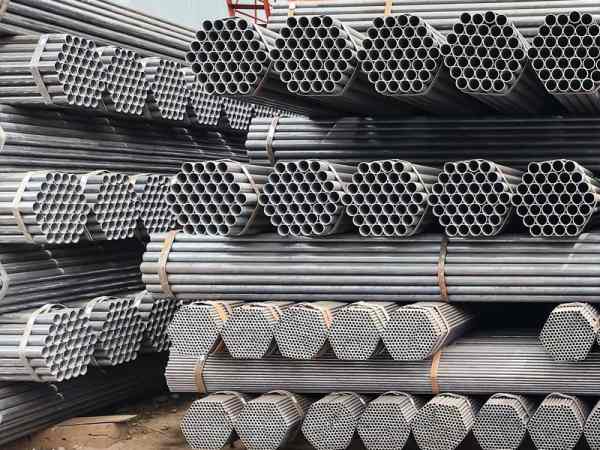
ERW pipe is a welded steel pipe produced by continuously forming steel strip or coil into a cylindrical shape and joining the edges using electrical resistance welding.
Modern ERW production lines typically include:
Coil preparation
Roll forming
High-frequency welding
Weld heat treatment
Sizing and straightening
Non-destructive testing
Hydrostatic testing
Surface treatment
Unlike seamless pipes, ERW pipes contain a longitudinal weld seam but benefit from high manufacturing efficiency and excellent dimensional consistency.
1. Cost-Effective Solution
One of the biggest advantages of ERW pipes is their lower manufacturing cost.
Compared with seamless steel pipes, ERW pipes can typically reduce material costs by 20%–40% while meeting the performance requirements of many industrial applications.
Benefits include:
Lower raw material consumption
Higher production efficiency
Reduced manufacturing waste
Competitive project costs
For large-volume infrastructure projects, these savings can significantly reduce overall investment costs.
2. High Dimensional Accuracy
ERW pipes are manufactured from precision-controlled steel coils, resulting in excellent dimensional consistency.
Key advantages include:
Uniform wall thickness
Accurate outside diameter
Better roundness
Improved fit-up during welding and installation
This precision reduces fabrication time and improves construction efficiency.
3. Reliable Weld Quality
Modern ERW manufacturing utilizes high-frequency welding technology that creates a strong metallurgical bond between pipe edges.
After weld heat treatment and online inspection, the weld area can achieve mechanical properties similar to the parent metal.
Quality control typically includes:
Ultrasonic testing (UT)
Eddy current testing (ECT)
Hydrostatic testing
Visual inspection
As a result, today's ERW pipes offer excellent reliability for industrial service.
4. Smooth Surface Finish
ERW pipes generally provide smoother internal and external surfaces than many alternative pipe products.
Advantages include:
Lower fluid flow resistance
Reduced pressure loss
Better coating adhesion
Improved corrosion protection performance
This makes ERW pipes particularly suitable for water transmission and pipeline coating applications.
5. Wide Availability and Size Range
ERW pipes are available in a broad range of:
Diameters
Wall thicknesses
Steel grades
Surface finishes
Common standards include:
ASTM A53
ASTM A500
API 5L
EN 10219
JIS G3444
The wide availability simplifies sourcing for global projects.
Oil and Gas Industry
ERW pipes manufactured to API 5L specifications are commonly used for:
Gathering lines
Flow lines
Station piping
Low- and medium-pressure transmission systems
Municipal Infrastructure
ERW pipes are widely utilized in:
Water supply systems
Drainage pipelines
Natural gas distribution networks
Fire protection systems
Structural Engineering
Structural-grade ERW pipes are commonly used in:
Building frames
Steel structures
Scaffolding
Foundation piles
Transmission towers
Mechanical Manufacturing
ERW tubing is frequently found in:
Automotive components
Agricultural machinery
Material handling equipment
Industrial machinery frames
|
Comparison Item |
ERW Pipe |
Seamless Pipe |
|
Manufacturing Process |
Formed and welded from steel coil |
Pierced from solid billet |
|
Weld Seam |
Yes |
No |
|
Production Cost |
Lower |
Higher |
|
Dimensional Accuracy |
Excellent |
Good |
|
Wall Thickness Uniformity |
Excellent |
Moderate |
|
Pressure Capability |
Medium to High |
High |
|
Availability |
Wide |
Limited in some sizes |
|
Typical Applications |
Pipelines, structures, mechanical tubing |
High-pressure and high-temperature service |
While seamless pipes remain the preferred choice for extreme pressure, high-temperature, or highly corrosive environments, ERW pipes offer a more economical solution for many industrial projects.
In many applications, yes.
ERW pipes are increasingly replacing seamless pipes in:
Water transmission systems
Structural applications
Mechanical tubing
Municipal pipelines
Medium-pressure oil and gas systems
However, seamless pipes are still preferred for:
High-pressure boiler systems
Critical refinery processes
Sour service environments (H₂S)
High-temperature power generation applications
The final selection should always be based on operating pressure, temperature, corrosion conditions, and project specifications.
When evaluating ERW pipe for a project, consider:
Operating Conditions
Verify:
Design pressure
Operating temperature
Corrosive media content
Safety requirements
Applicable Standards
Common specifications include:
API 5L
ASTM A53
ASTM A500
EN 10219
Quality Requirements
Confirm whether the supplier provides:
Hydrostatic testing
Ultrasonic testing
Eddy current testing
Mill test certificates (MTC)
Cost Optimization
If seamless pipe performance is not required, ERW pipe often provides the most cost-effective solution.
1. What is the main advantage of ERW pipe?
ERW pipe offers lower cost, high dimensional accuracy, and reliable performance for a wide range of industrial applications.
2. Is ERW pipe stronger than seamless pipe?
Not necessarily. Seamless pipe generally performs better in extreme pressure and temperature conditions, while ERW pipe is sufficient for most medium-pressure applications.
3. Can ERW pipe be used for oil and gas pipelines?
Yes. ERW pipes manufactured according to API 5L standards are widely used in gathering systems and transmission pipelines.
4. How long does ERW pipe last?
Depending on operating conditions and corrosion protection measures, ERW pipe can provide a service life of 20–50 years or more.

United Steel Industry As the most important steel pipe manufacturer and exporter in China, in the past 20 years, we have completed more than 100 projects, with partners in more than 100 countries, and established relationships with oil and gas and EPC companies in many countries business relationship.
For more information about the product price, catalog and rolling mill inspection certificate,
please consult:Email:Sales@usisteels.com