-
2025-08-14Product News
Key factors affecting the life of seamless steel pipes
The service life of seamless steel pipes does not have a fixed value—it can range from just a few years to several decades, or even over a century. This lifespan is determined by multiple interrelated factors. United Steel Industry Co., Ltd summarizes the five most critical considerations.
-
2025-08-14Product News
API 5L PSL1 seamless carbon steel pipe
API 5L PSL1 is a material standard issued by the American Petroleum Institute (API) for steel pipes primarily used in oil and natural gas transportation. The standard ensures that the pipe offers the necessary strength, toughness, and corrosion resistance to perform reliably in complex transportation environments and under demanding operating pressures. This article will briefly introduce API 5L PSL1 seamless carbon steel pipe.
-
2025-08-06Product News
Details of 45Mn2 seamless steel pipe
As a high-performance alloy structural steel, 45Mn2 seamless steel pipe holds an essential position in industrial applications. Known for its excellent mechanical properties and good processability, it is widely used across machinery manufacturing, petrochemical engineering, the automotive sector, and more. This article will briefly introduce 45Mn2 seamless steel pipe.
-
2025-08-05Product News
Which seamless steel pipe is the hardest?
When people ask about the “hardest” seamless steel pipe, it’s important to clarify what “hardness” really means. In metallurgy, hardness often refers to a material’s resistance to wear, abrasion, or deformation. While high hardness can improve durability, it often comes at the expense of toughness—so not all applications benefit from extremely hard steel. In this article, we’ll explore what makes a seamless steel pipe “hard,” what factors affect its hardness, and which types of steel pipes are typically considered the hardest.
-
2025-08-04Product News
Characteristics and application Y1Cr13 seamless steel pipe
Y1Cr13 seamless steel pipe is a stainless steel material primarily composed of chromium and carbon. Y1Cr13 seamless steel pipe is a high-quality stainless steel product known for its excellent machinability, moderate corrosion resistance, and reliable mechanical properties. As a martensitic stainless steel containing approximately 13% chromium, Y1Cr13 is widely used in industries that require components with good strength and fair corrosion resistance, such as valves, pump shafts, and mechanical parts. In this article, we’ll explore the key characteristics and common applications of Y1Cr13 seamless steel pipes.
-
2025-07-30Product News
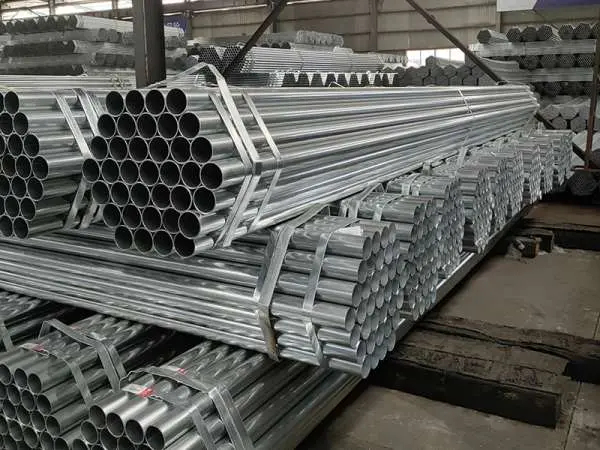
Galvanized steel pipes for industrial projects
Steel pipes are essential components in modern construction and infrastructure projects. Among them, galvanized steel pipes stand out for their superior corrosion resistance, strength, and durability, making them a preferred choice in a wide range of applications. This article will briefly introduce galvanized steel pipes for industrial projects.
-
2025-07-29Product News
Details of D500 spiral welded steel pipe
Spiral welded steel pipe is a widely used pipe type in construction, infrastructure, and industrial applications. Among them, D500 spiral welded steel pipe stands out for its excellent performance and reliability, making it a preferred material in modern engineering projects. This article will briefly introduce D500 spiral welded steel pipe.
-
2025-07-28Product News
Application and characteristics of DN450 seamless steel pipe
DN450 seamless steel pipe is a widely used standard-size pipe in the steel industry, known for its versatile applications and outstanding performance across various sectors. Here is an overview of application and characteristics of DN450 seamless steel pipe.
-
2025-07-24Product News
A guide to corrosion resistance of galvanized seamless steel pipe
The service life of a galvanized seamless steel pipe depends on two critical factors: the quality of its zinc coating and the corrosivity of its environment. While galvanizing provides a valuable layer of protection, its performance varies significantly and is generally less robust than stainless steel or specialized heavy-duty anti-corrosion coatings. This guide explores the corrosion resistance characteristics of galvanized seamless pipe and the key factors that influence its durability.
-
2025-07-22Product News
Overview of mechanical tube size
Mechanical tubes are a category of precision steel pipes specially designed for use in machinery manufacturing, engineering equipment, and industrial power or fluid transmission systems. These tubes are primarily supplied as seamless pipes or high-precision welded pipes, and are engineered to fulfill critical mechanical functions such as structural support, hydraulic fluid delivery, and power transmission.
-
2025-07-21Product News
X100QO seamless steel pipe details
X100QO seamless steel pipe is a high-performance steel product widely used across the oil, natural gas, and chemical industries, among other fields. Its seamless design enhances the safety and reliability of pipeline connections, enabling it to withstand high pressure and elevated temperatures, thereby ensuring the continuous and safe operation of industrial systems.
-
2025-07-17Product News
Introduction to L415M straight seam steel pipe
L415M straight seam steel pipe, also known as L415M straight seam welded steel pipe, is a high-strength pipeline product widely used in oil and natural gas transmission projects. This article will briefly introduce L415M straight seam steel pipe.